The Heatwave Was A Stress Test. Did Your Estate Pass ?
'%20fill='%230A2841'%3e%3cg%20id='Group-23'%20transform='translate(1030,%20300)'%3e%3cg%20id='Group-22'%20transform='translate(0,%2015)'%3e%3crect%20id='Rectangle-Copy-6'%20fill-opacity='0.08'%20x='0'%20y='0'%20width='36'%20height='36'%20rx='15'%3e%3c/rect%3e%3cg%20id='Group-3-Copy-10'%20transform='translate(14,%2011)'%3e%3cpath%20d='M1.48030663,7.00622181%20L0,7.00622181%20L0,4.54113581%20L1.47413869,4.54113581%20C1.47413869,4.01634435%201.4507005,3.52367128%201.48092343,3.03386591%20C1.50559521,2.63812154%201.54383646,2.23147985%201.66472817,1.85466237%20C2.01506741,0.761490221%202.84959027,0.135181726%204.05048903,0.0382530307%20C5.00096925,-0.0380281321%205.96501894,0.0233409237%206.94078773,0.0233409237%20L6.94078773,2.40813096%20C6.43008195,2.40813096%205.92986166,2.40755742%205.42964138,2.40813096%20C4.82209886,2.40927805%204.61238876,2.60428252%204.60868799,3.1778251%20C4.60622081,3.6183058%204.6080712,4.0587865%204.6080712,4.53540038%20L7,4.53540038%20C6.90686404,5.37449317%206.81804564,6.17515861%206.72676007,7.00105992%20L4.61979029,7.00105992%20L4.61979029,14%20L1.48030663,14%20L1.48030663,7.00622181%20Z'%20id='Fill-1'%3e%3c/path%3e%3c/g%3e%3c/g%3e%3c/g%3e%3c/g%3e%3c/g%3e%3c/svg%3e)



The recent heatwave was a real-world stress test for FM operations across the UK. Hospitals reported cooling failures, retailers experienced refrigeration issues and facilities teams faced increased pressure as critical assets worked harder than normal. For FM teams, the heatwave meant rising call volumes, increased reactive maintenance demand and greater pressure on engineers and contractors tasked with keeping sites operational.
In reality, the heatwave tested far more than air conditioning units and chillers. It tested the resilience of assets, the effectiveness of operational processes and an organisation's ability to respond when demand increased unexpectedly. Which raises an important question:
Did your estate pass the stress test?
What Did The Heatwave Expose?
Extreme weather rarely creates entirely new problems. More often, it exposes weaknesses that already existed. The ageing asset that has become less reliable over time. The recurring fault that has generated multiple call-outs but never been fully investigated. The site that consistently generates more reactive maintenance demand than comparable locations.
These issues often exist beneath the surface of day-to-day operations. A heatwave simply applies enough pressure to make them impossible to ignore. That is why events such as last week's heatwave provide valuable operational insight. They reveal where vulnerabilities exist within the estate and which assets, sites or processes may require further attention.
What Did You Learn?
Once temperatures return to normal, many organisations move on to the next challenge. However, the most effective FM teams take a different approach and review what happened.
- Which assets generated the most reactive jobs?
- Which sites experienced the greatest demand?
- Were there recurring failures?
- Did response times come under pressure?
- What patterns emerge across all work orders?
Every call, work order, engineer visit and asset failure contributes to a wider story. The challenge is connecting those events together to identify trends, risks and opportunities for improvement.
A chiller failure during the heatwave may appear to be a one-off incident. However, when viewed alongside previous maintenance records and asset history, it may reveal a pattern that has existed for months. Likewise, a site that struggled during the heatwave may expose a longer-term issue relating to asset condition, maintenance strategy or operational resilience.
The organisations that gain the greatest value from events like this are not necessarily those that experienced the fewest failures. They are the organisations that learn the most from them.
Preparing For The Next Stress Test
With higher temperatures returning this week, now is a good time to reflect on what your estate learned from the last heatwave. After all, heatwaves are just one of many events that can test operational resilience.
Most organisations already have the information they need to improve performance. The challenge is turning that information into actionable insight. Understanding which assets repeatedly fail, which sites generate the greatest maintenance demand and where operational risks are emerging can make the difference between responding to an issue and preventing it altogether.
This is where the right CAFM platform can make a significant difference.
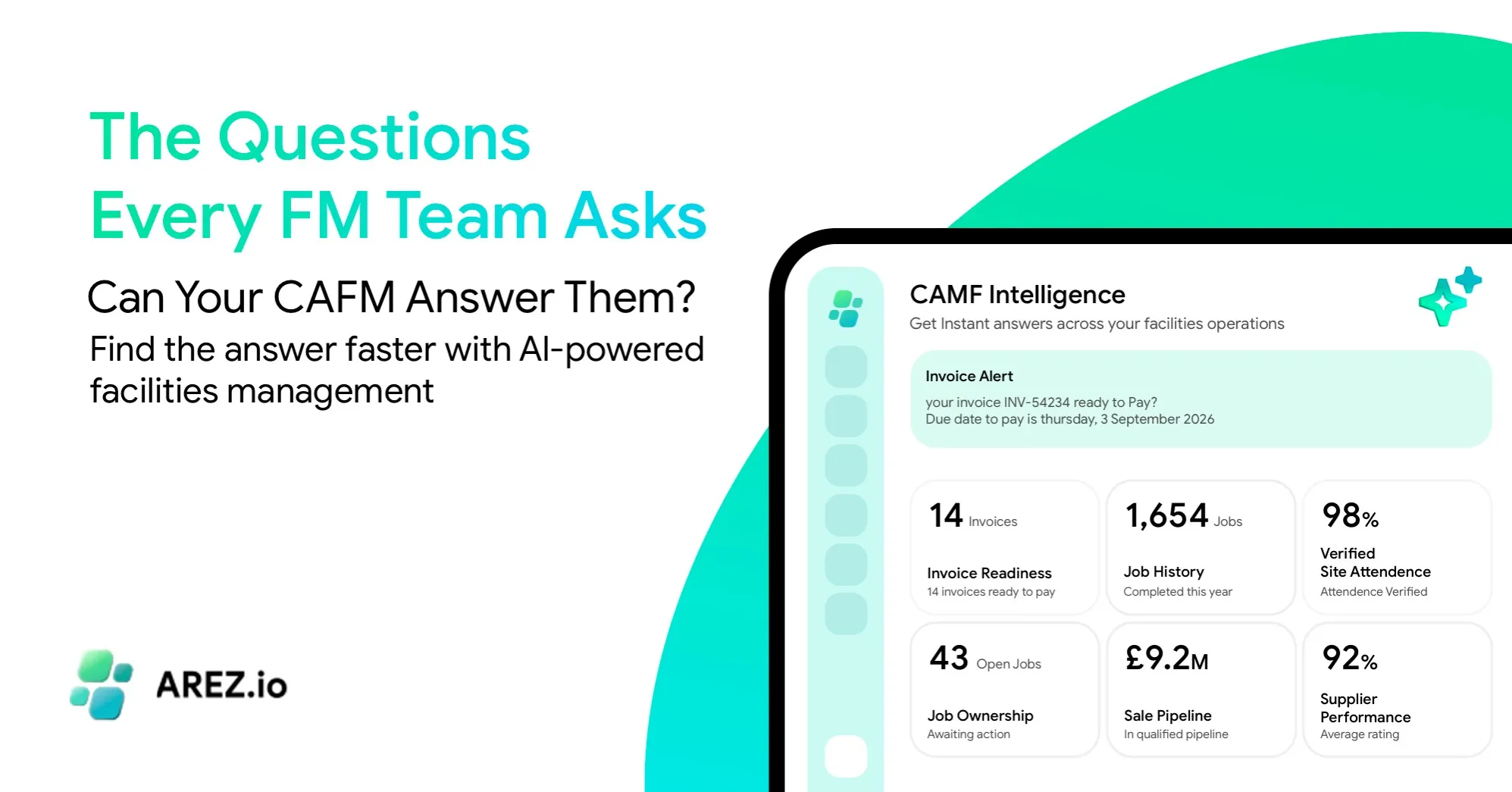
Arez helps organisations move beyond simply recording jobs and start understanding what those jobs are telling them. By bringing together asset histories, reactive maintenance trends, site-level performance and operational data, teams can identify recurring failures, spot emerging risks and make more informed decisions about maintenance, investment and operational priorities.
Teams can drill into individual sites, review asset histories, analyse reactive maintenance trends and understand whether an issue is an isolated incident or part of a wider pattern. Instead of relying on spreadsheets, disconnected reports or individual work orders, they gain a clearer picture of what is happening across the estate and where attention is needed.
The real value is not knowing that a chiller failed during the heatwave. It is knowing that it was the third failure in six months, that the site has generated more reactive maintenance demand than comparable locations and that replacing the asset may be more cost-effective than repairing it again.
The heatwave may be over, but the next stress test is already on its way. The question is whether your estate will perform better when it arrives.
If you would like to see how Arez is helping FM businesses introduce AI in a practical and controlled way, book a free 20-minute demo and follow us on LinkedIn.