Reducing Admin Work for FM Teams: The Hidden Productivity Opportunity
'%20fill='%230A2841'%3e%3cg%20id='Group-23'%20transform='translate(1030,%20300)'%3e%3cg%20id='Group-22'%20transform='translate(0,%2015)'%3e%3crect%20id='Rectangle-Copy-6'%20fill-opacity='0.08'%20x='0'%20y='0'%20width='36'%20height='36'%20rx='15'%3e%3c/rect%3e%3cg%20id='Group-3-Copy-10'%20transform='translate(14,%2011)'%3e%3cpath%20d='M1.48030663,7.00622181%20L0,7.00622181%20L0,4.54113581%20L1.47413869,4.54113581%20C1.47413869,4.01634435%201.4507005,3.52367128%201.48092343,3.03386591%20C1.50559521,2.63812154%201.54383646,2.23147985%201.66472817,1.85466237%20C2.01506741,0.761490221%202.84959027,0.135181726%204.05048903,0.0382530307%20C5.00096925,-0.0380281321%205.96501894,0.0233409237%206.94078773,0.0233409237%20L6.94078773,2.40813096%20C6.43008195,2.40813096%205.92986166,2.40755742%205.42964138,2.40813096%20C4.82209886,2.40927805%204.61238876,2.60428252%204.60868799,3.1778251%20C4.60622081,3.6183058%204.6080712,4.0587865%204.6080712,4.53540038%20L7,4.53540038%20C6.90686404,5.37449317%206.81804564,6.17515861%206.72676007,7.00105992%20L4.61979029,7.00105992%20L4.61979029,14%20L1.48030663,14%20L1.48030663,7.00622181%20Z'%20id='Fill-1'%3e%3c/path%3e%3c/g%3e%3c/g%3e%3c/g%3e%3c/g%3e%3c/g%3e%3c/svg%3e)


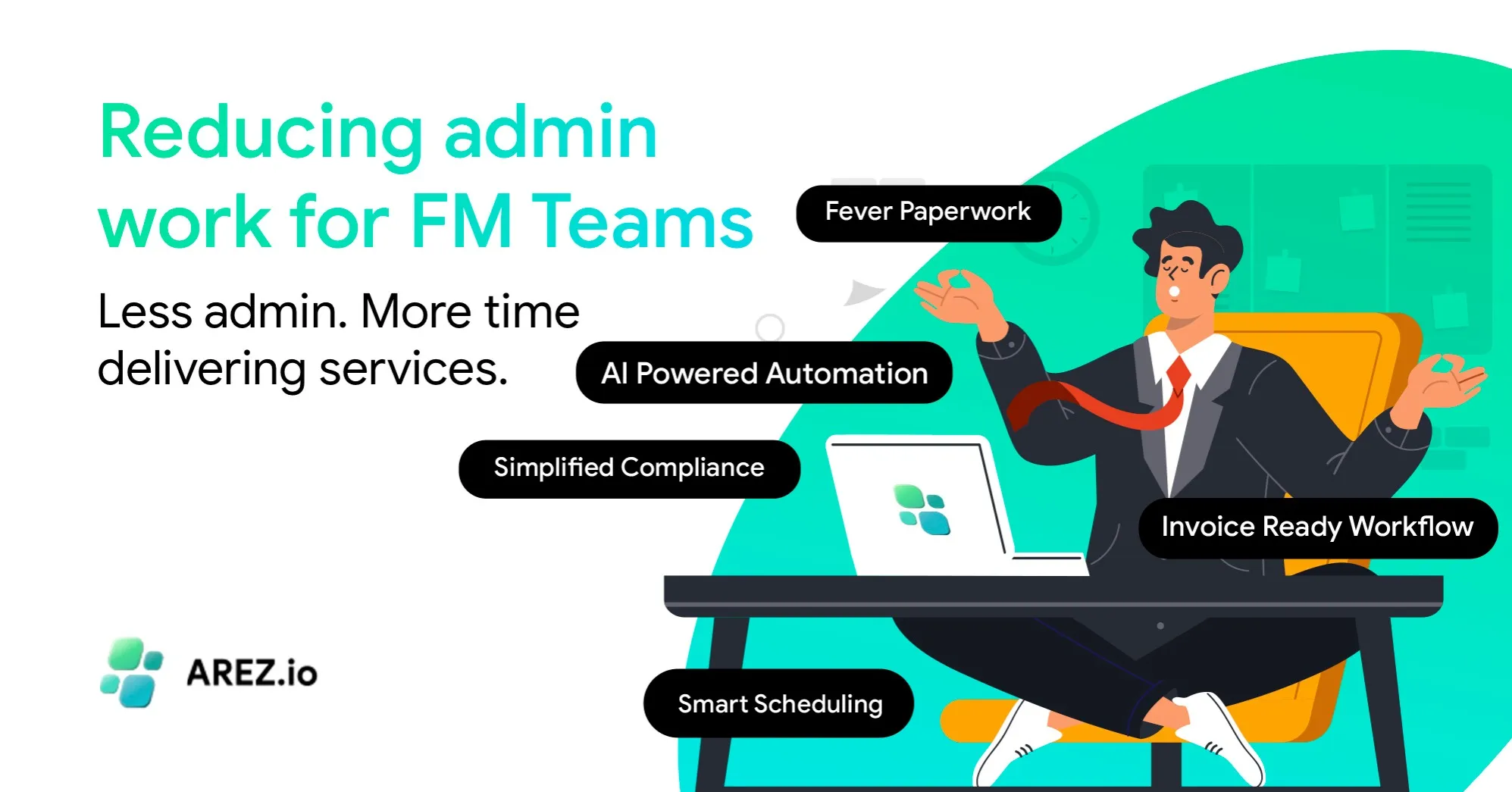
Ask any Facilities Management director what their biggest operational bottleneck is, and they’ll likely talk about supply chain delays, rising material costs, or engineering shortages.
But look closer at how your teams actually spend their day, and the real culprit appears. It isn’t a lack of tools, nor a lack of technical expertise.
It is the crushing weight of manual administration.
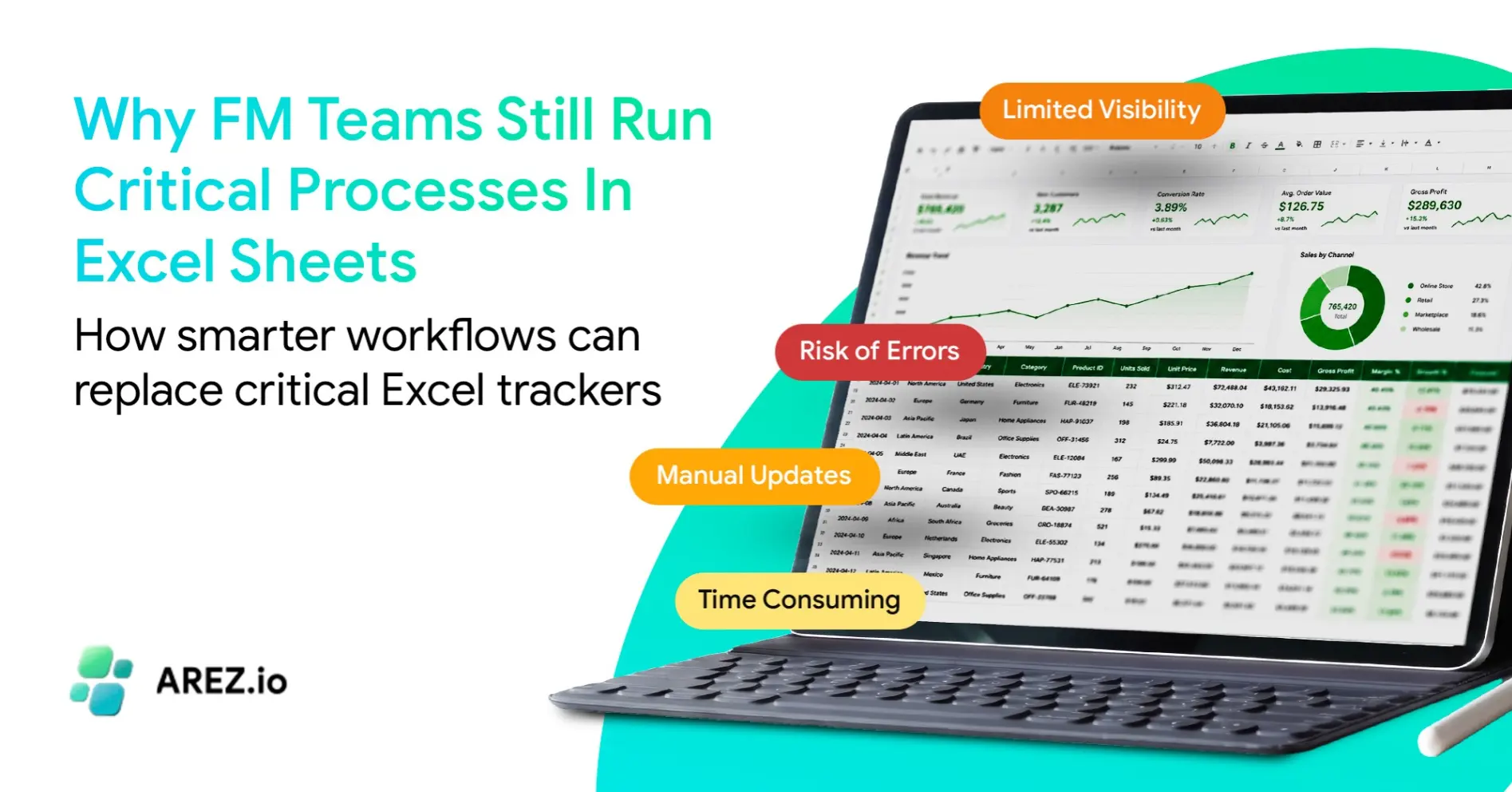
Every single day, highly skilled FM managers and operational teams find themselves reduced to high-priced data-entry clerks. They are chasing status updates via WhatsApp, manually copy-pasting data across disconnected spreadsheets, digging through shared drives for missing compliance certificates, and wrestling with rigid, legacy software.
The harsh reality of modern facilities management is simple: Administration scales faster than operations. Adding more contracts shouldn’t mean drowning in more paperwork. Yet, as portfolios grow, information splinters across emails, disconnected CAFM tools, and paper trails. Too much valuable technical expertise is currently tied up in managing information rather than delivering service.
The industry is reaching an absolute tipping point. To survive and protect margins, FM providers don't need more bodies or another disjointed software subscription. They need to close the gap between data recording and active operational execution.
Administration Scales Faster Than Operations
One of the challenges many FM providers face is that administrative work often outpaces the business itself.
Adding more contracts means more jobs to schedule, more compliance records to maintain, more contractors to manage, and more documentation to review. What starts as a manageable process can quickly become difficult to control when information is spread across emails, spreadsheets, shared drives and disconnected software systems.
The problem is rarely a lack of expertise.
The problem is that too much valuable expertise is tied up in managing information rather than service delivery.
This is particularly common in businesses that handle reactive maintenance, planned preventative maintenance (PPM), compliance management, and subcontractor coordination simultaneously.
Traditional CAFM Systems Often Create More Work
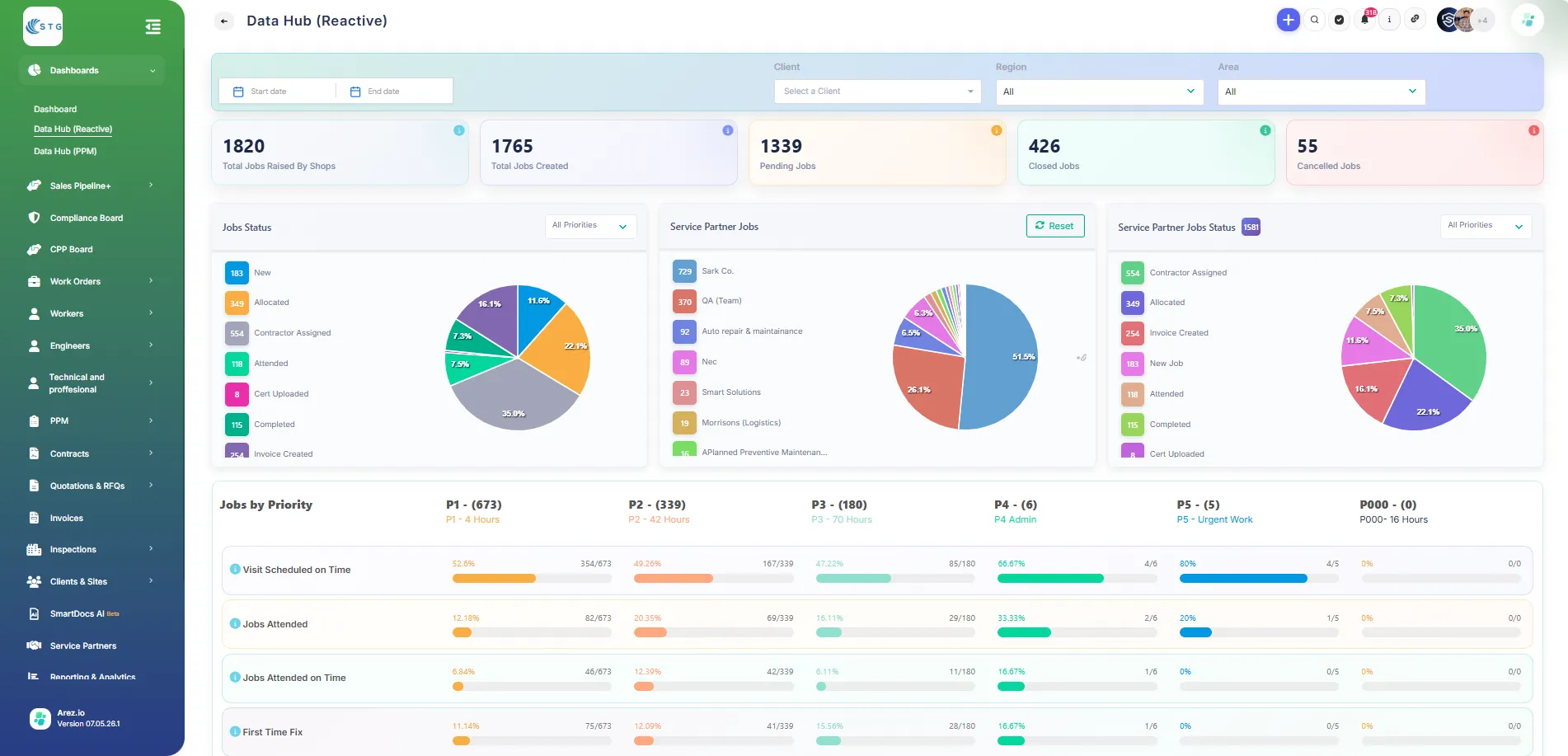
Many traditional CAFM platforms were designed to record information rather than actively manage operations.
They store maintenance records, asset information, and work orders effectively, but operational teams often remain responsible for manually moving jobs through the workflow.
Engineers complete work. Office teams chase updates. Compliance records are reviewed separately. Invoices are prepared after paperwork has been collected.
The software becomes a repository rather than an operational assistant.
This is one of the reasons more organisations are now evaluating the difference between traditional CAFM systems and AI-powered operational platforms.
Our article on AI vs Traditional CAFM Systems explores this shift in more detail.
Compliance Shouldn't Be an Administrative Exercise
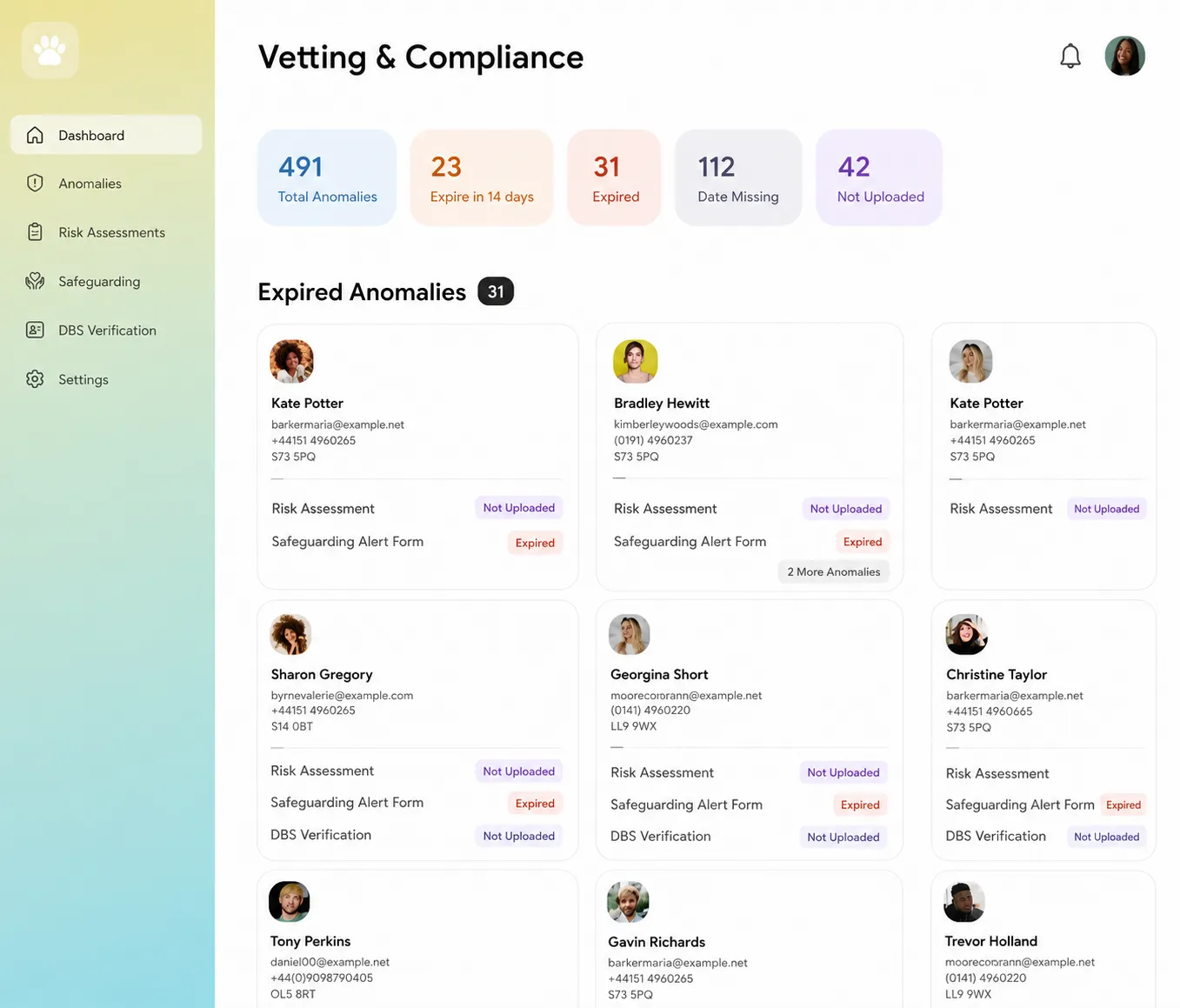
Compliance remains one of the most important responsibilities within facilities management.
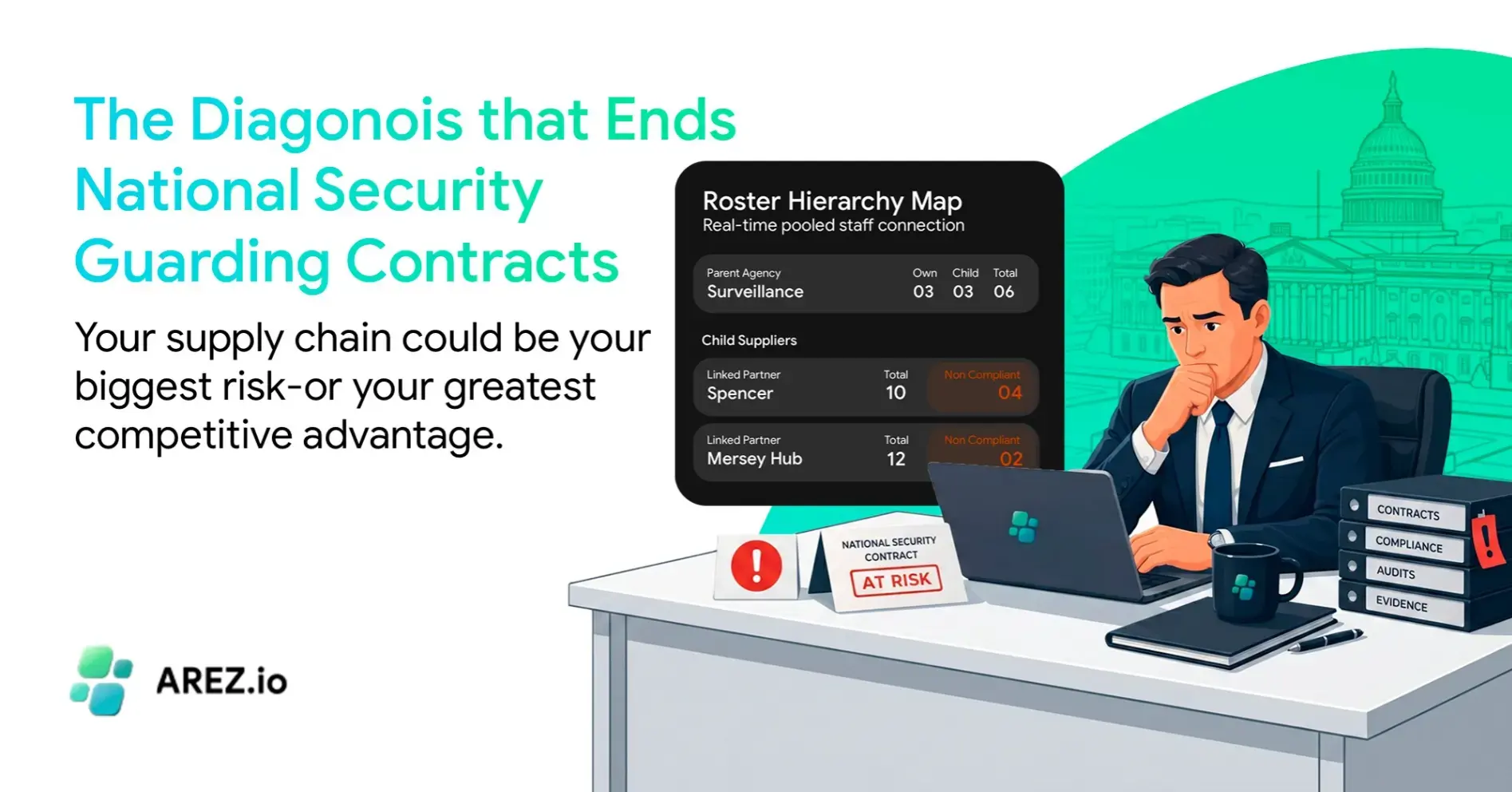
However, many organisations still manage compliance through a mixture of paper forms, spreadsheets and disconnected digital systems. When certificates, service records, risk assessments and proof of work are stored separately, preparing for audits becomes a time-consuming administrative process.
The most effective FM teams now build compliance directly into operational workflows.
Information is captured once, at the point of delivery, and automatically becomes part of the permanent service record. This creates cleaner documentation, better accountability and significantly less administration.
It's also why we recently explored the importance of balancing technology with operational oversight.
The Biggest Time Savings Come from Connected Workflows
Most FM businesses don't suffer from a lack of software.
They suffer from too many disconnected systems.
Jobs are managed in one platform. Compliance records are stored somewhere else. Communication happens through emails and messaging apps. Invoicing is handled separately.
Every handover creates more administration.
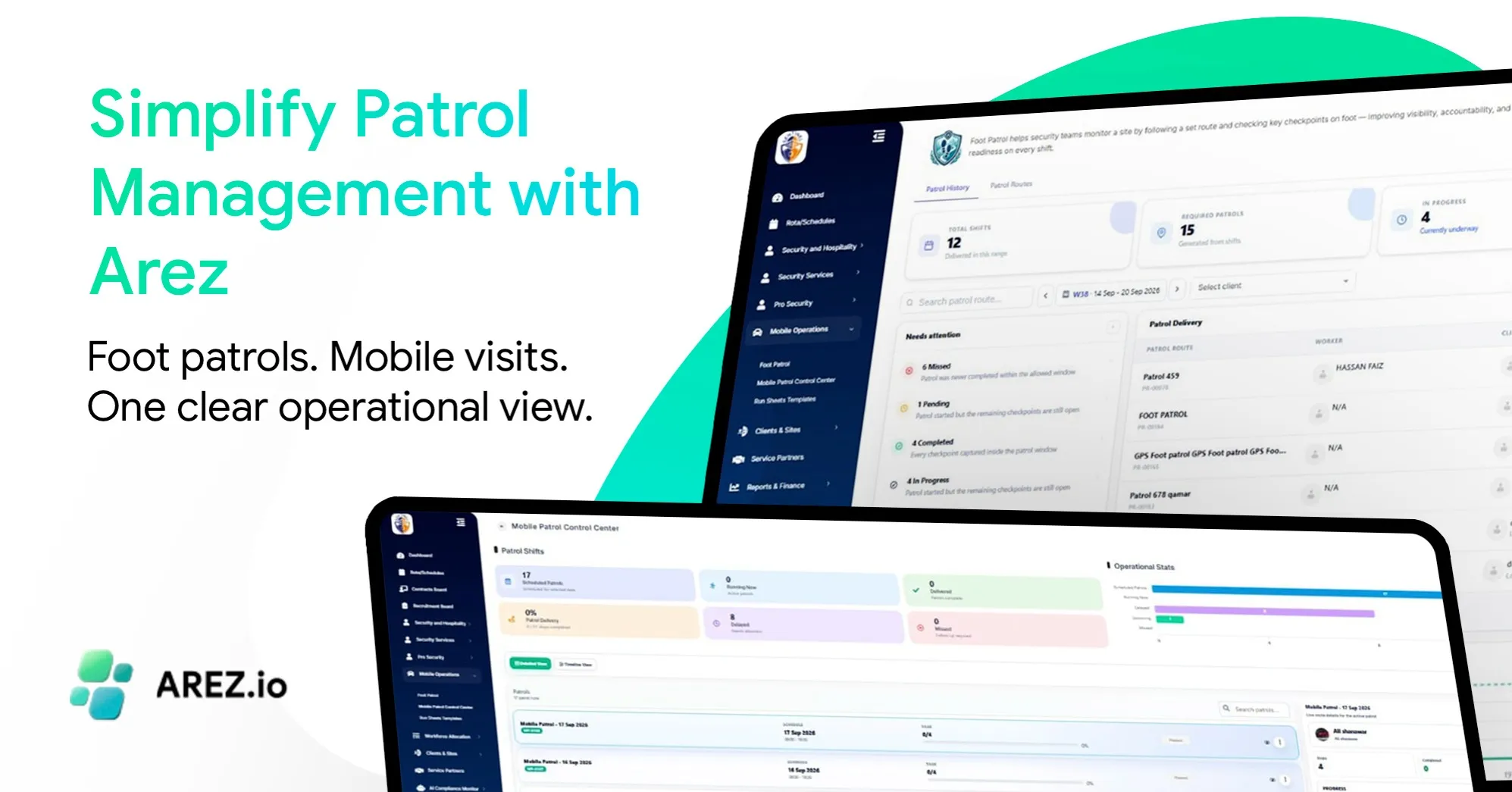
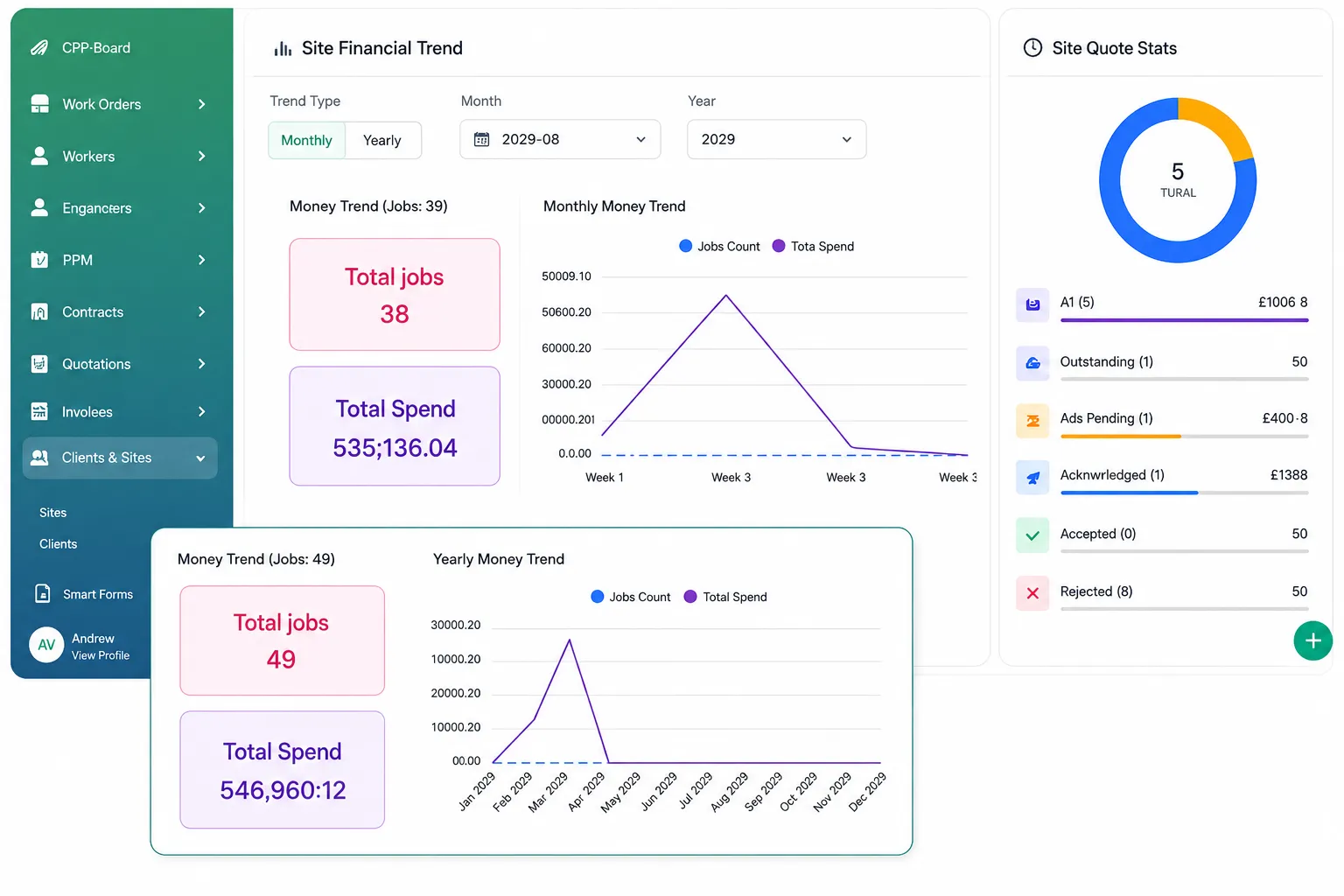
Modern FM platforms are increasingly designed around connected workflows, bringing together reactive maintenance, planned servicing, compliance, subcontractor management and invoicing within a single operational environment.
This approach is central to modern Facilities Management Software because it removes duplication and allows information to flow naturally through the business.
AI Is Helping FM Teams Focus on Higher-Value Work
Much of the administrative burden within facilities management comes from repetitive tasks.
Scheduling jobs. Updating statuses. Reviewing documentation. Following up on missing information.
These tasks are necessary, but they don't necessarily require human expertise.
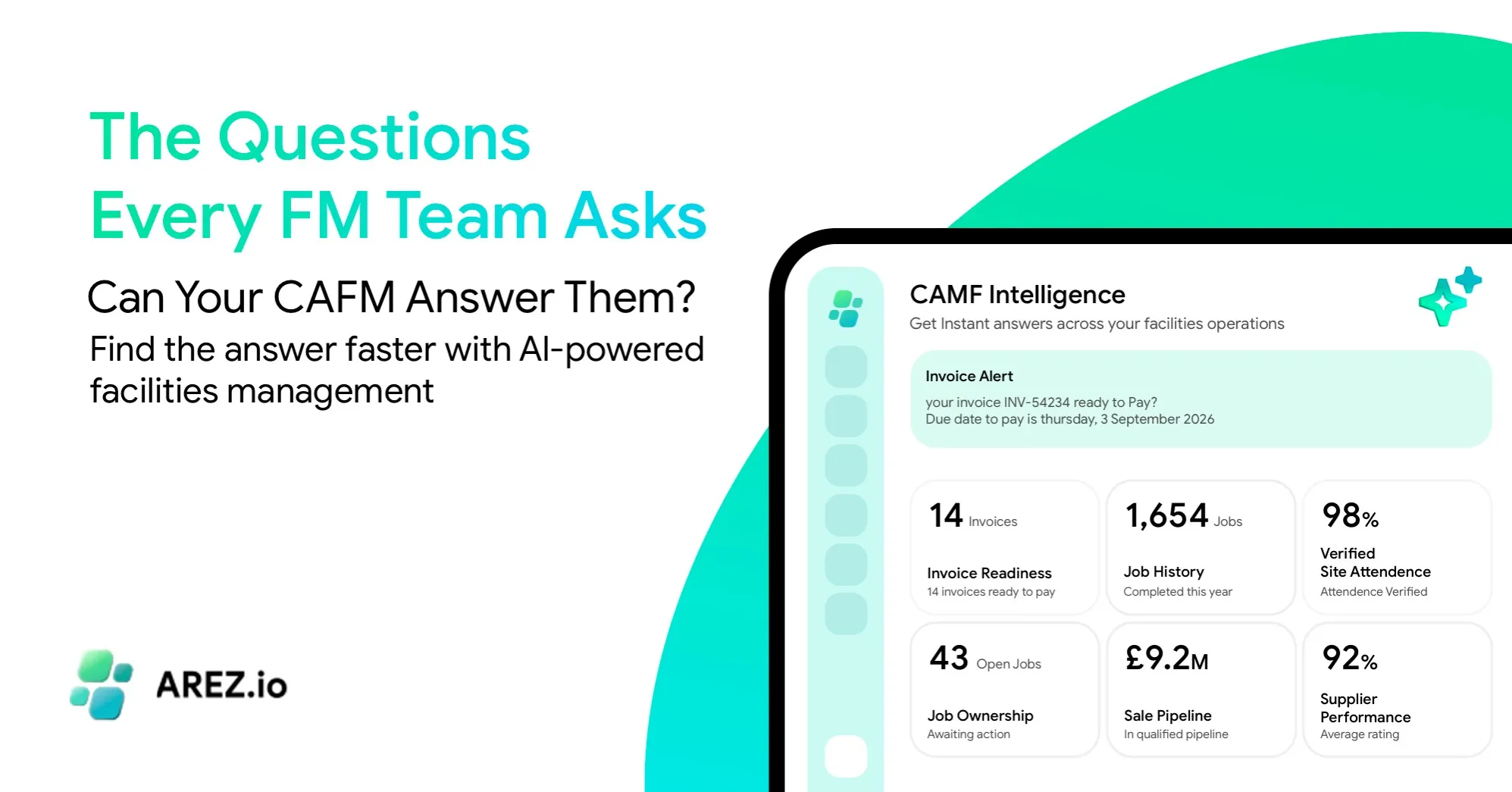
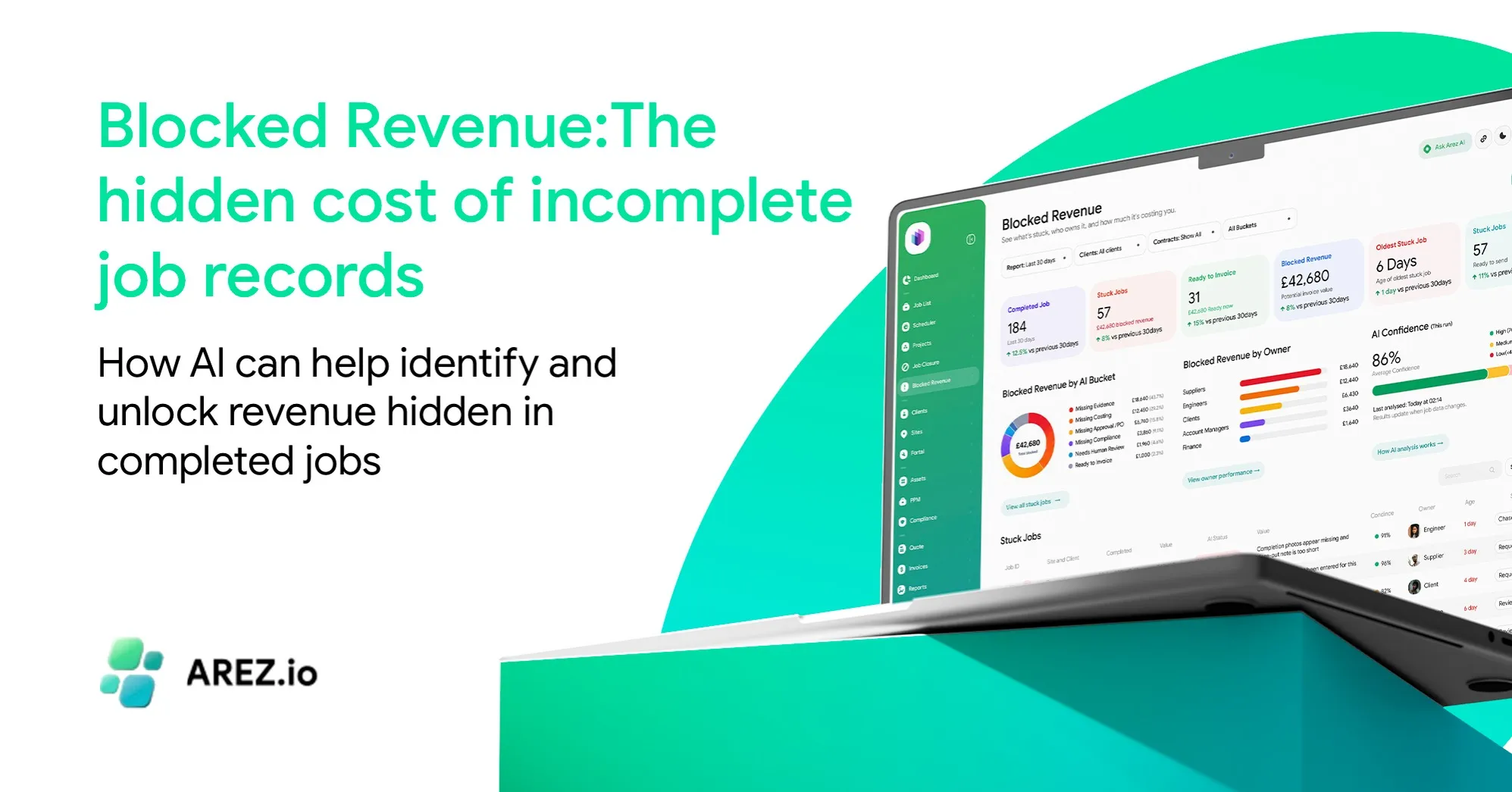
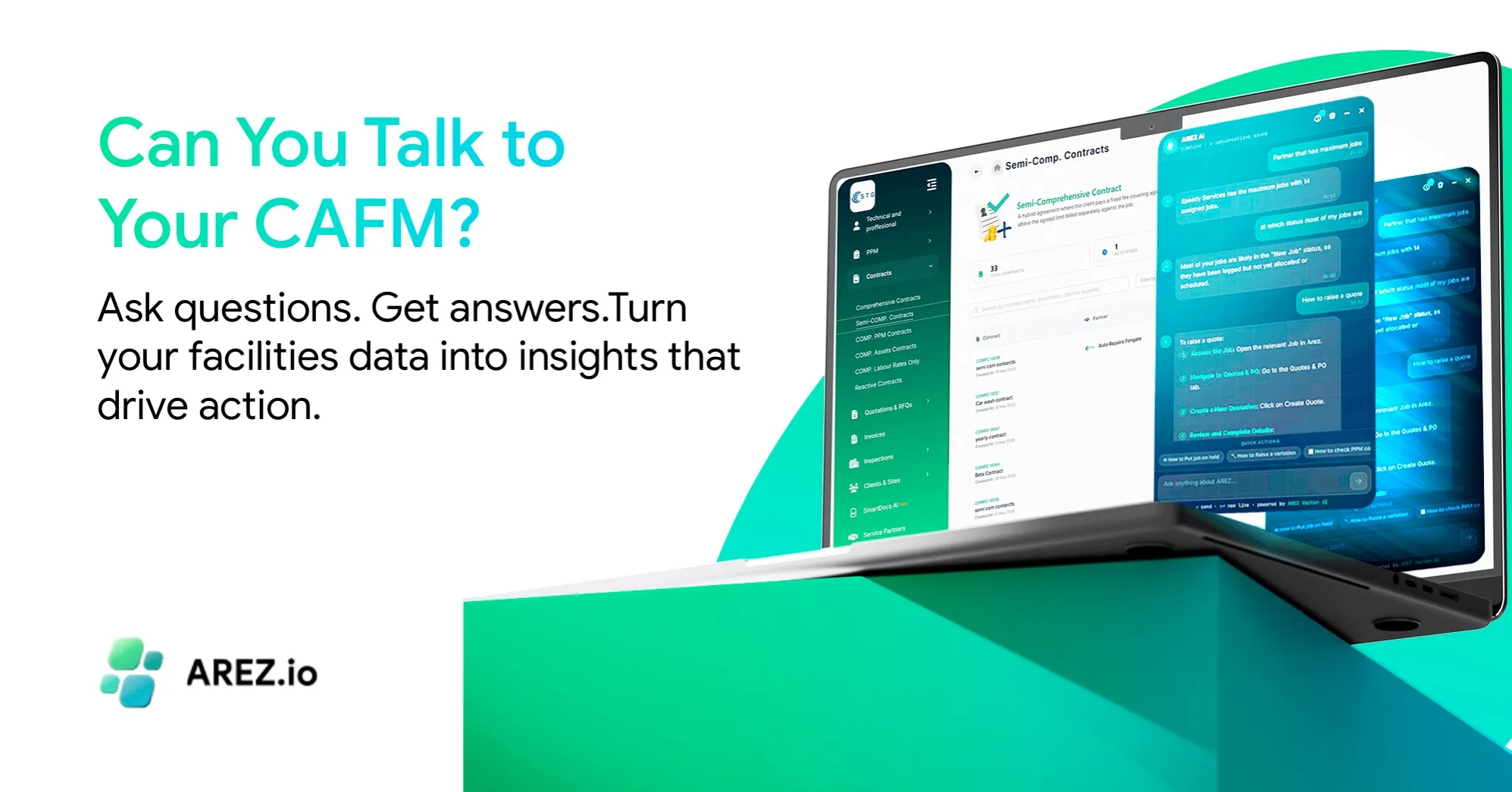
AI is increasingly being used to automate these operational processes, helping FM teams spend less time coordinating work and more time delivering it.
At Arez, AI is already supporting workflow automation, compliance management, operational visibility and invoice-ready close-out processes. The goal is not to replace people. The goal is to remove friction from the work they already do.
This is particularly valuable for businesses operating in sectors such as:
- Property Maintenance
- Mechanical & Electrical Services
- Fire & Security Maintenance
- Electrical Contracting
- Multi-site Facilities Management
where operational complexity can quickly become difficult to manage manually.
Reducing Admin Across Every Maintenance Sector
The administrative challenges facing FM teams are remarkably similar across industries.
Whether managing a property portfolio, maintaining critical building systems or coordinating specialist contractors, the underlying issue remains the same: too much time spent moving information instead of delivering services.
That is why the same operational principles apply across Arez's specialist solutions:
- Property Maintenance Software
- Mechanical & Electrical Contractor Software
- Fire & Security Maintenance Software
- Electrical Contractor Software
Each solution is built around the same objective: reducing administrative burden while improving operational control.
The Future of FM Is Less Manual
Facilities management is becoming increasingly complex, but complexity doesn't have to mean more administration.
The most successful FM providers are finding ways to automate repetitive processes, connect operational workflows and create better visibility across their business.
Reducing admin is one of the fastest ways to improve productivity, profitability and service quality simultaneously.
The future of facilities management isn't more paperwork.
It's smarter operations powered by connected workflows, real-time visibility and AI-assisted decision making.
Final Thoughts
Most FM teams don't need more software.
They need fewer disconnected processes.
By reducing manual administration, centralising compliance, improving workflow automation and creating a single source of operational truth, businesses can spend less time managing information and more time delivering exceptional service.
That is the direction facilities management is moving — and it's exactly the problem Arez was built to solve.
If you would like to see how Arez is helping FM businesses introduce AI in a practical and controlled way, book a free 20-minute demo and follow us on LinkedIn.