The AI Tipping Point in Facilities Management
'%20fill='%230A2841'%3e%3cg%20id='Group-23'%20transform='translate(1030,%20300)'%3e%3cg%20id='Group-22'%20transform='translate(0,%2015)'%3e%3crect%20id='Rectangle-Copy-6'%20fill-opacity='0.08'%20x='0'%20y='0'%20width='36'%20height='36'%20rx='15'%3e%3c/rect%3e%3cg%20id='Group-3-Copy-10'%20transform='translate(14,%2011)'%3e%3cpath%20d='M1.48030663,7.00622181%20L0,7.00622181%20L0,4.54113581%20L1.47413869,4.54113581%20C1.47413869,4.01634435%201.4507005,3.52367128%201.48092343,3.03386591%20C1.50559521,2.63812154%201.54383646,2.23147985%201.66472817,1.85466237%20C2.01506741,0.761490221%202.84959027,0.135181726%204.05048903,0.0382530307%20C5.00096925,-0.0380281321%205.96501894,0.0233409237%206.94078773,0.0233409237%20L6.94078773,2.40813096%20C6.43008195,2.40813096%205.92986166,2.40755742%205.42964138,2.40813096%20C4.82209886,2.40927805%204.61238876,2.60428252%204.60868799,3.1778251%20C4.60622081,3.6183058%204.6080712,4.0587865%204.6080712,4.53540038%20L7,4.53540038%20C6.90686404,5.37449317%206.81804564,6.17515861%206.72676007,7.00105992%20L4.61979029,7.00105992%20L4.61979029,14%20L1.48030663,14%20L1.48030663,7.00622181%20Z'%20id='Fill-1'%3e%3c/path%3e%3c/g%3e%3c/g%3e%3c/g%3e%3c/g%3e%3c/g%3e%3c/svg%3e)


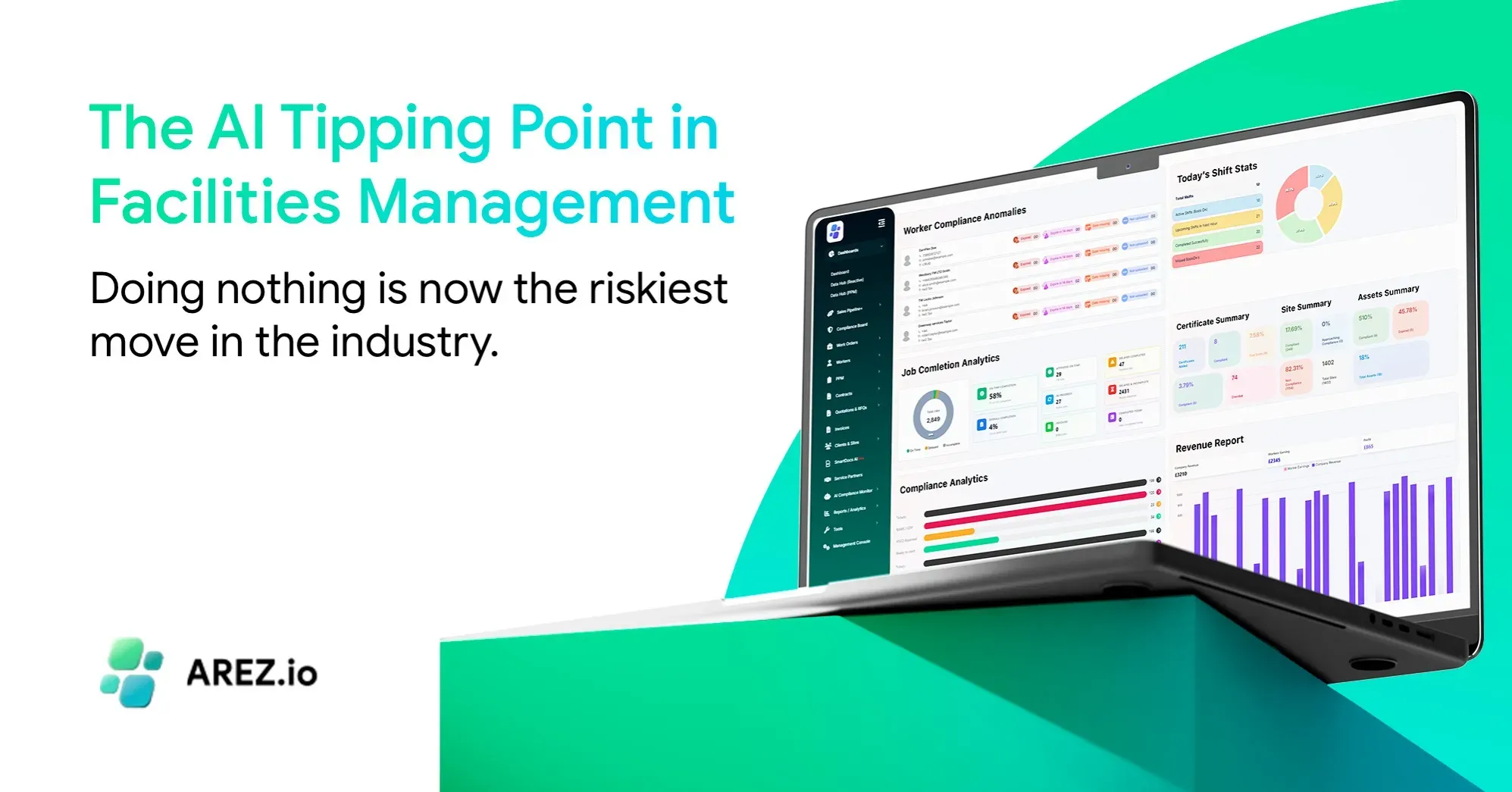
Nobody talks about Facilities Management the way they should.
They picture wrenches. Work orders. A guy in a hi-vis jacket.
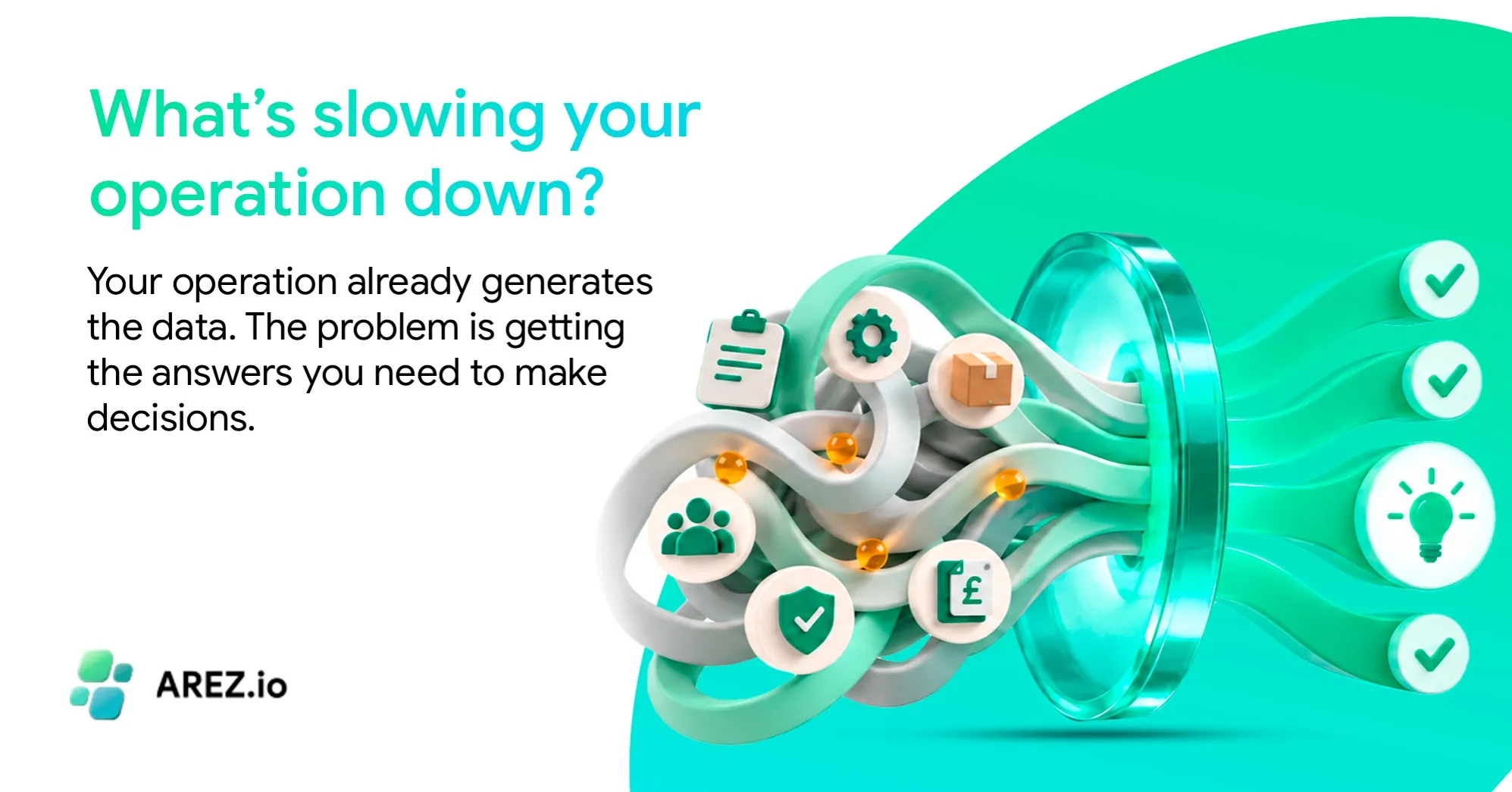
What they don't picture is what FM actually is: one of the most relentlessly complex data-and-logistics operations on the planet. On any given day, a facilities management provider is simultaneously acting as a compliance enforcer, a health and safety monitor, a supply chain coordinator, a contract interpreter, and an emergency responder — all while managing a daily hurricane of information pouring in from hundreds of directions at once.
Scattered emails. Overlapping systems. SLA clocks ticking. PPM schedules. Compliance documents that never seem to be in the same place twice.
Modern facilities management software must centralize compliance, scheduling, contractor coordination, and operational visibility in one workflow. It just gets described that way by people who've never run it.
And that gap — between how FM is perceived and what FM actually demands — is precisely why it is the single best industry in the world for Artificial Intelligence to make a transformational difference.
Not a gimmick. Not a pilot project. A genuine, commercial, margin-protecting difference.
First, Let's Kill the Hype
Before we get into what AI actually does for FM, let's dispose of something that's doing the industry a disservice.
A contract manager uses ChatGPT to write a friendlier version of a difficult client email. A marketing team uses it to polish a brochure. The company updates its website to say "AI-powered."
This is not enterprise AI. This is autocomplete with good PR.
The hype machine would have you believe AI is about to replace entire helpdesks, make engineers redundant, and render contract managers obsolete. This narrative is both wrong and dangerous — wrong because it fundamentally misunderstands where AI creates value today, and dangerous because it causes FM businesses to either dismiss AI entirely ("it's just a gimmick") or invest in the wrong places ("let's build a chatbot").
The real value of AI in FM right now is far less glamorous and far more profitable.
It is not about replacing the people who understand buildings, clients, and service delivery. Those people are irreplaceable. It is about removing the suffocating administrative weight that wraps around them every single day and stops them from doing the work that actually matters.
McKinsey put a number on it. Professionals spend, on average, 1.8 hours every single day — roughly 20% of their entire working week — just searching for information and gathering data.
In FM, that 20% looks like this: chasing missing job photos. Deciphering an engineer's notes that make sense to nobody. Manually checking whether a work order was actually completed. Building an evidence pack at 11 pm because a client is disputing an invoice on a job you know was done correctly, but you can't prove it quickly enough.
AI does not need to repair the building. It needs to repair the workflow around it.
The Tipping Point Nobody Is Talking About
Here's the uncomfortable truth that most FM operators aren't yet facing directly:
We have crossed an economic threshold.
For most of the last decade, adopting AI in FM was a strategic choice — a forward-thinking investment for companies that wanted to be ahead of the curve. That framing is now out of date.
As competitors begin scaling their operations with AI absorbing the administrative load, the cost structure of running an FM business is fundamentally shifting. The companies moving now are achieving higher throughput with the same headcount. More sites. More jobs. More compliance without more coordinators.
The gap between them and the companies still running manual workflows is not going to close — it is going to widen, quarter by quarter, contract by contract.
This is no longer about innovation. It is about survival economics.
And the companies that realise this in 2025 will look back on this moment the same way retailers now look back at the ones who ignored e-commerce in 2005. Not with admiration. With a quiet recognition that the decision — the failure to decide — shaped everything that followed.
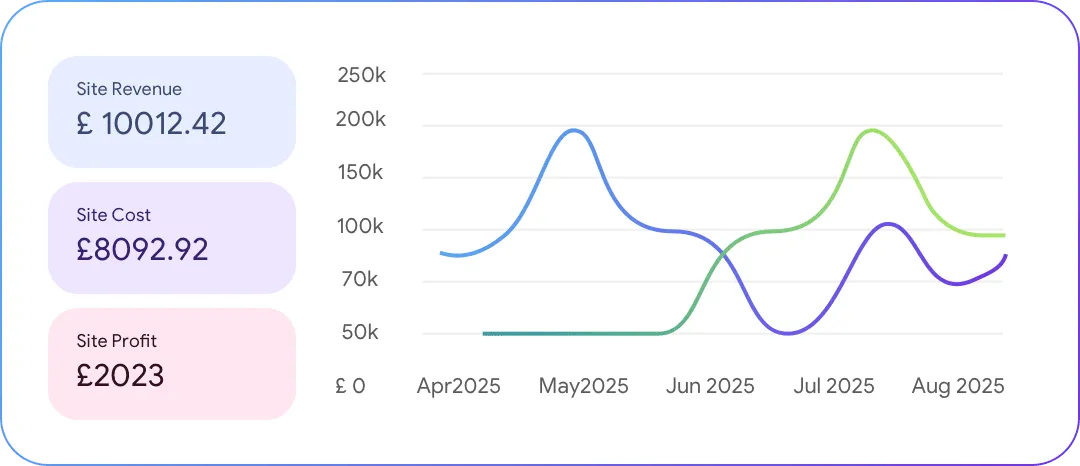
What AI Actually Does Inside a Real FM Operation
Forget the marketing language for a moment. Here is what AI embedded into an FM workflow actually looks like, operationally, on a Tuesday afternoon:
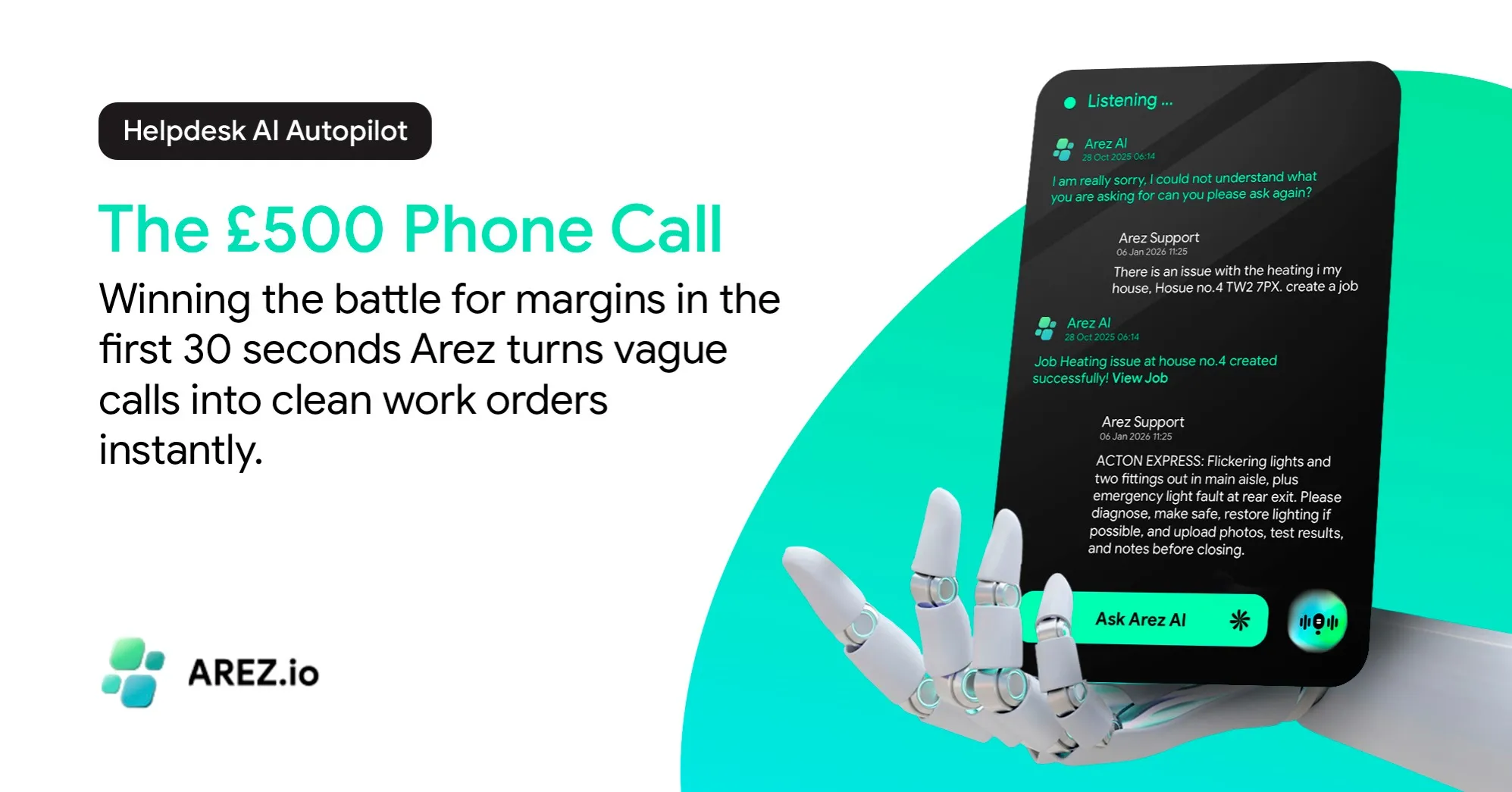
It reads the chaos and brings order to it. A messy job request comes in — vague description, no category, no priority assigned. AI reads it instantly and suggests the correct trade category, the right priority level, the appropriate SLA, and the most likely supplier. Before a human has looked at it properly.
It catches the compliance gap before it becomes an audit failure. A PPM visit gets closed. AI flags, automatically, that the required compliance evidence was never attached. It stops that closure before it moves forward. The audit failure that would have happened in three months — during a contract review, in front of a client — never occurs.
It turns engineer notes into something humans can actually read. "Arrived. Gate locked. Called FM. Waited. Job done. Left." — AI takes this, cross-references the job history, the timestamps, the photos, and produces a clean, professional close-out summary that a client, a contract manager, or a finance team can actually use without making three phone calls.
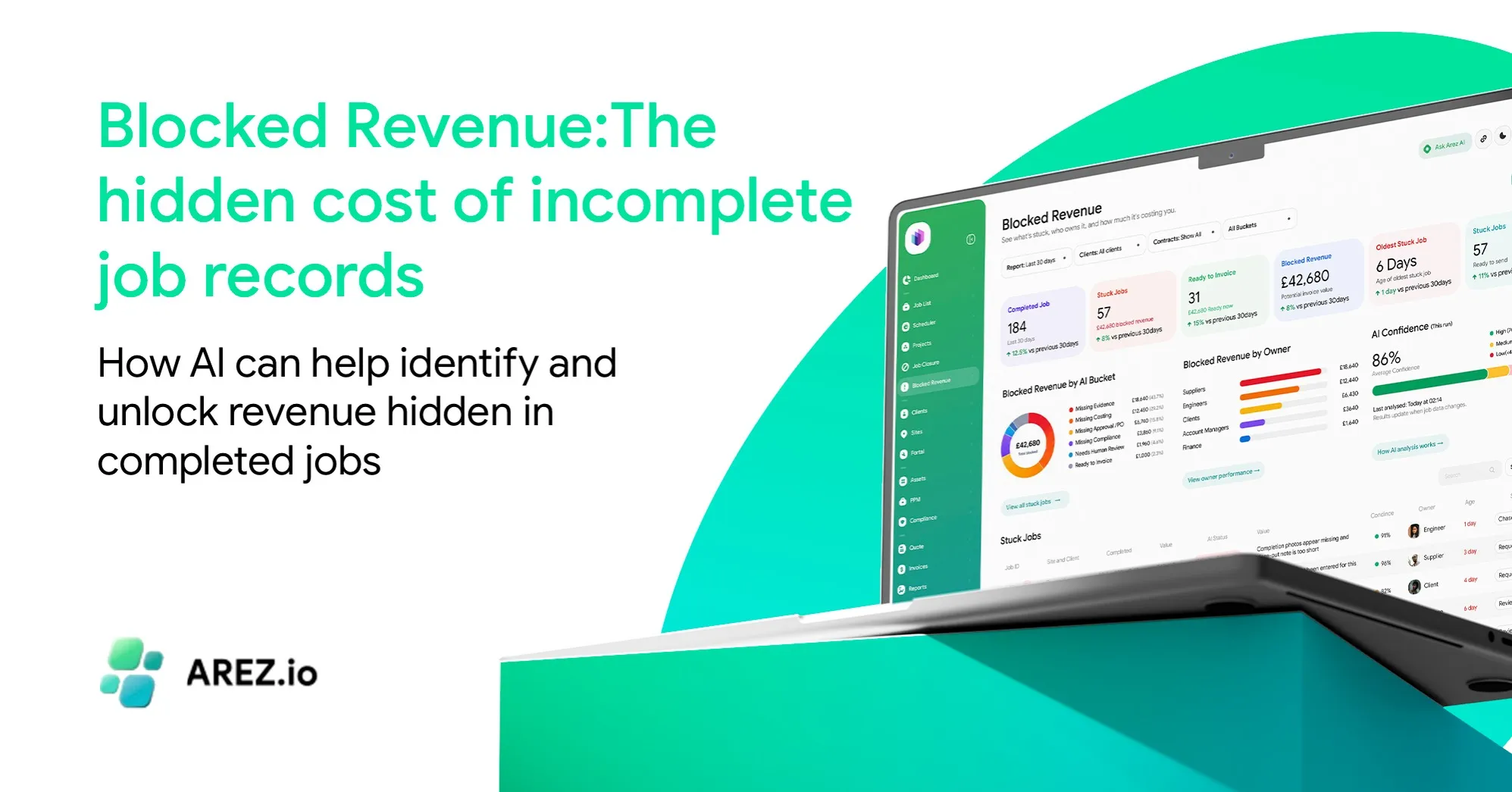
It dispute-proofs your invoicing before the invoice goes out. It checks timestamps against SLA windows. It cross-references photos against job status. It flags when the evidence doesn't match the record. Before the invoice. Before the client queries it. Before the margin is lost defending something that should never have been in dispute.
Gartner estimates that poor data quality costs organisations an average of $12.9 million annually. In FM, that number has a very specific face: margin leakage, delayed billing, failed audits, and contract managers who are brilliant at their jobs but are spending half their day building evidence packs instead of managing relationships.
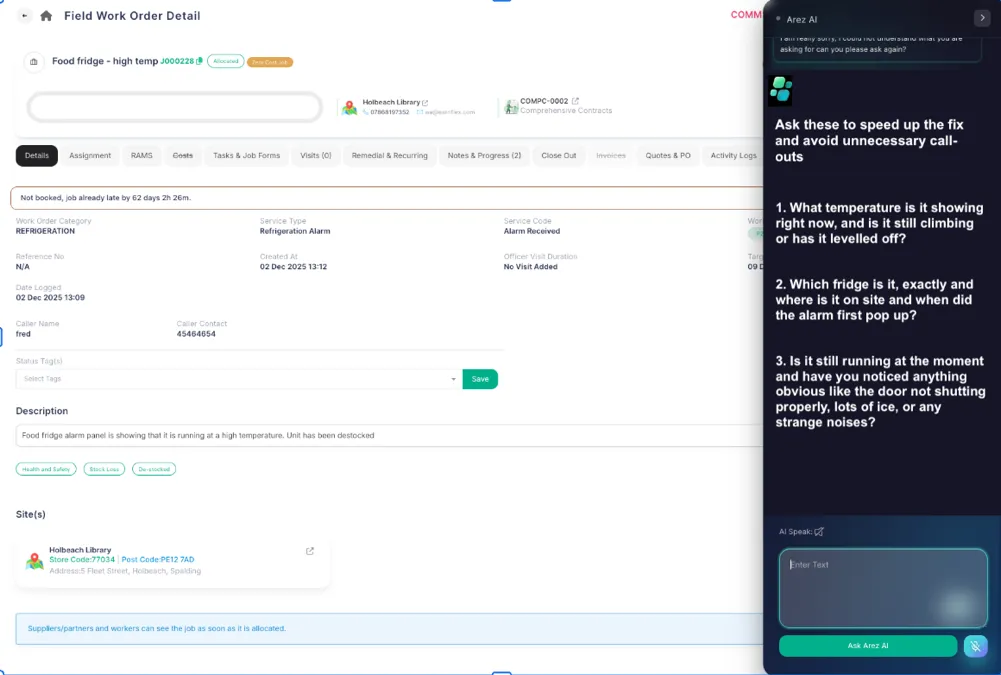
Where FM Companies Actually Win or Lose
The companies that are going to define FM's next decade are not the ones making the loudest claims about artificial intelligence.
They are the ones quietly embedding it into the unglamorous, commercially critical moments that happen inside every single job:
The intake. The triage. The scheduling. The evidence capture. The compliance check. The invoice.
These are not exciting places to talk about at a conference. But they are exactly where the difference between profitable FM delivery and margin erosion lives.
The right question to ask about AI in FM is not "can it write a clever paragraph?"
It is:
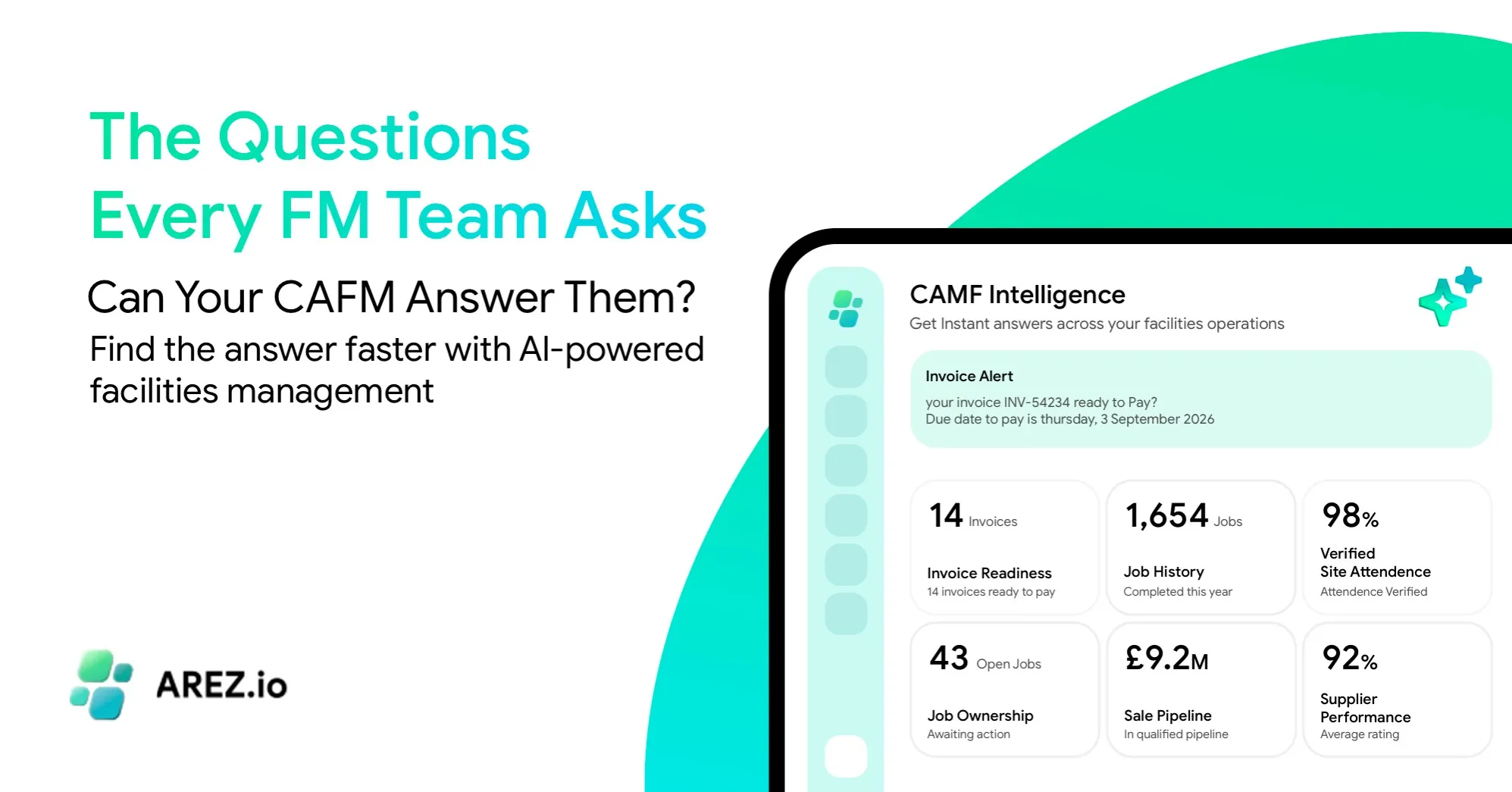
"Can it tell me, right now, whether that job is actually ready to invoice?"
"Are we missing a compliance document that's going to fail an audit?"
"What is most likely to become tomorrow's problem if nobody acts on it today?"
Answer those three questions faster, more reliably, and at scale — and you have not built a technology product. You have built a fundamentally more profitable operations business.
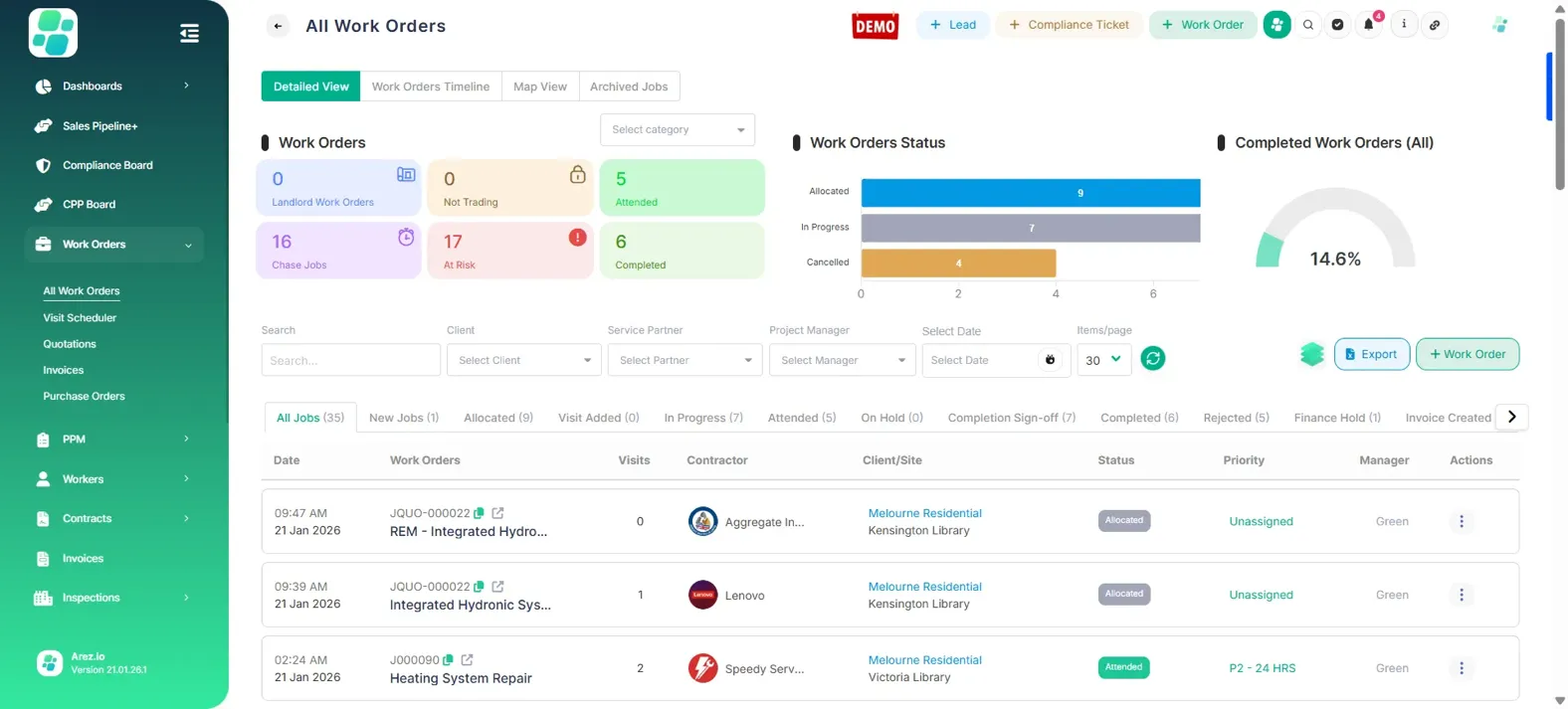
The Bottom Line
AI in FM is not magic. It is not a chatbot. It is not a replacement for the expertise and relationships that make this industry work.
It is faster operations. Stronger evidence. Cleaner compliance. Fewer things are falling through the cracks at the worst possible moment.
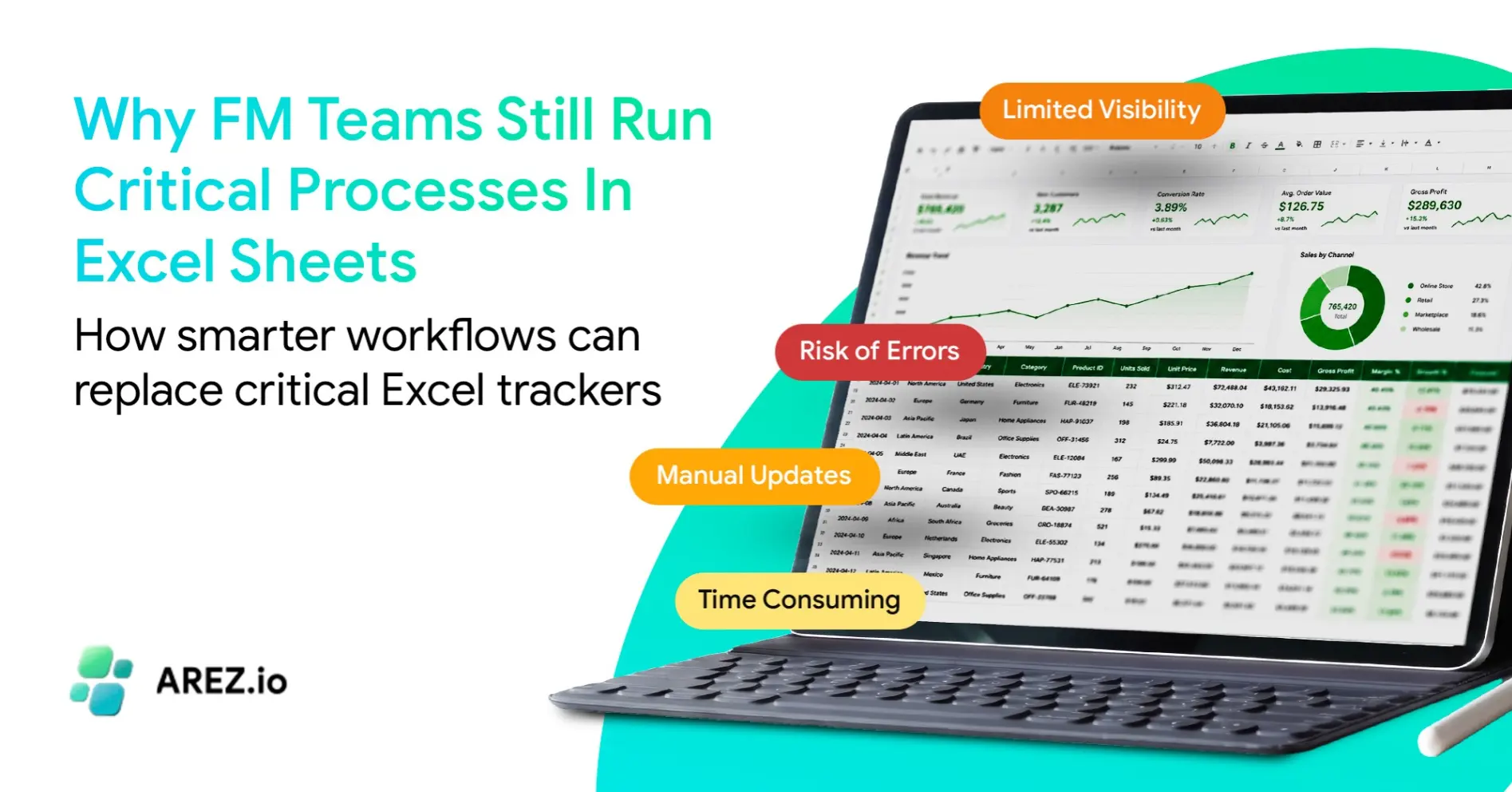
And in an industry where the difference between margin and loss is hidden in the details of service delivery — in the notes, the timestamps, the photos, the documents that nobody looks at until someone demands to see them — continuing to manage that detail manually is not a neutral choice.
It is an increasingly expensive one.
Arez FieldIQ is built specifically for FM operators who want AI working inside their actual workflow — not as a feature, but as the operational foundation. If this resonates with what you're dealing with, we'd like to talk.
To book your free demo click here: https://arez.io/book-a-demo