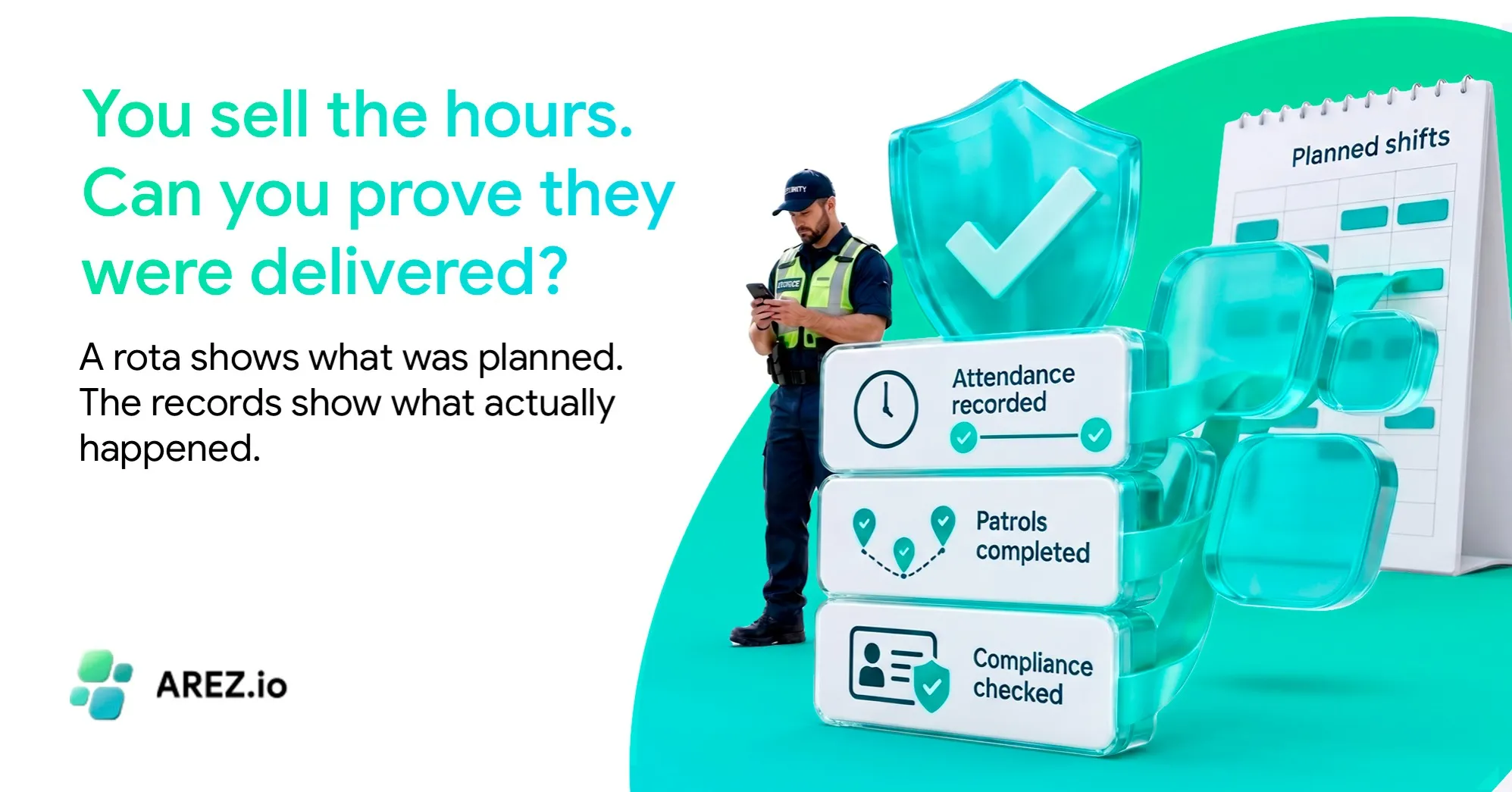
You sell the hours. Can you prove they were delivered? A rota shows what was planned. The records show what actually happened.


Security contracts come with clear expectations: officers must attend the right sites, cover the agreed hours and complete the required patrols. Delivering that consistently across multiple sites and shifts takes careful coordination. But managing the service is only part of the job. You also need to demonstrate that it was delivered.
A rota shows what should have happened. It doesn't tell you who actually turned up, how long they stayed or whether every required patrol was completed.
Are the agreed hours covered
Before you can prove the contracted hours were delivered, you need to make sure the right shifts are covered in the first place.
Planning rotas across multiple sites means balancing client requirements with officer availability, location and the licences or qualifications needed for each shift. Last-minute absences, changes to requirements and additional events can quickly put pressure on the resourcing team.
Finding cover isn't simply a case of filling an empty slot. You need someone who is available, suitably qualified and able to get to the site. When that means working through calls and messages to find a replacement, the process takes time and can lead to unnecessary overtime or gaps in coverage.
Effective roster planning helps you identify suitable people for each shift, respond to changes and keep control of staffing costs. AI-assisted allocation can help identify available, suitable officers when requirements change at short notice.
A shift on the rota doesn't prove it was delivered
When an officer calls in sick, arrives late or leaves early, the impact goes beyond filling a gap in the rota. You need to know what happened, record the change and understand whether the client received the service they paid for.
If attendance records are incomplete or spread across different systems, investigating discrepancies takes time. It can also make it harder to respond when a client queries the hours delivered or disputes an invoice.
Reliable attendance records give you a clearer picture of what happened and the evidence to support it.
Patrols need proof too
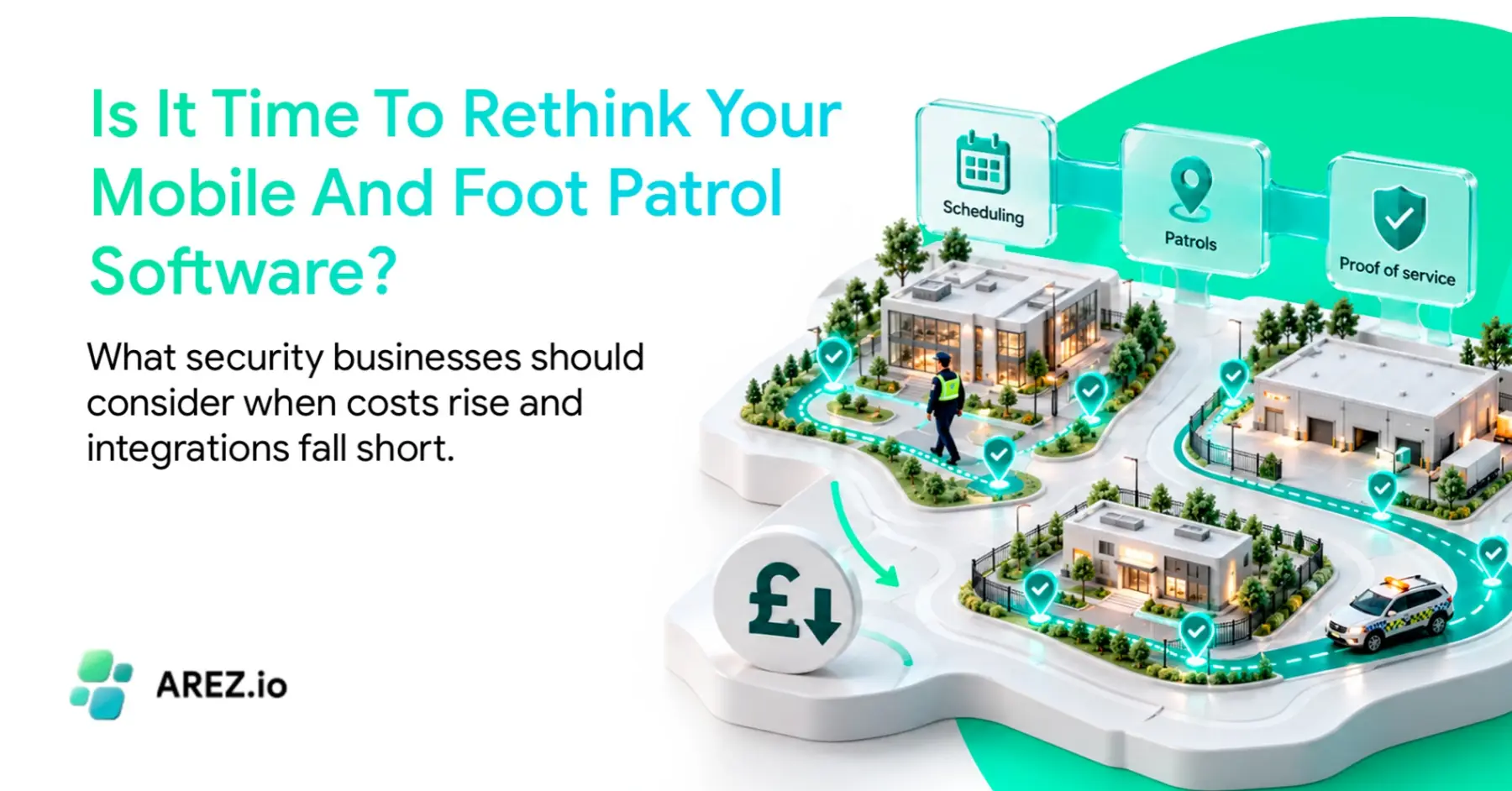
For security businesses providing mobile and foot patrols, scheduling a visit is only the starting point. You also need to know whether the officer visited the right locations, completed the required checkpoints and recorded any issues.
GPS data, timestamps, checkpoint records and visit notes help supervisors identify missed or incomplete patrols and provide evidence when clients ask what happened.
The sooner an exception comes to light, the sooner the team can investigate it rather than discovering the problem during a later review.
Compliance is part of service delivery
You also need confidence that the people delivering the service meet the relevant requirements. That means keeping worker vetting, SIA licences where applicable and supplier documentation up to date, and ensuring compliance checks form part of the process rather than relying entirely on manual reviews.
Clear records and automated monitoring help teams identify missing or expired documentation and address issues before they affect deployment.
From shift planning to proof of service with Arez
Arez Operate brings shift allocation, workforce compliance, attendance and patrol management together, giving security teams a clearer view of activity across their sites.
When a shift needs covering, Pulse, Arez Operate’s AI-assisted allocation feature, helps identify suitable available officers based on the requirements of the shift. Whether you're dealing with a last-minute absence or arranging staffing for a large event, it reduces the manual work involved in finding the right person.
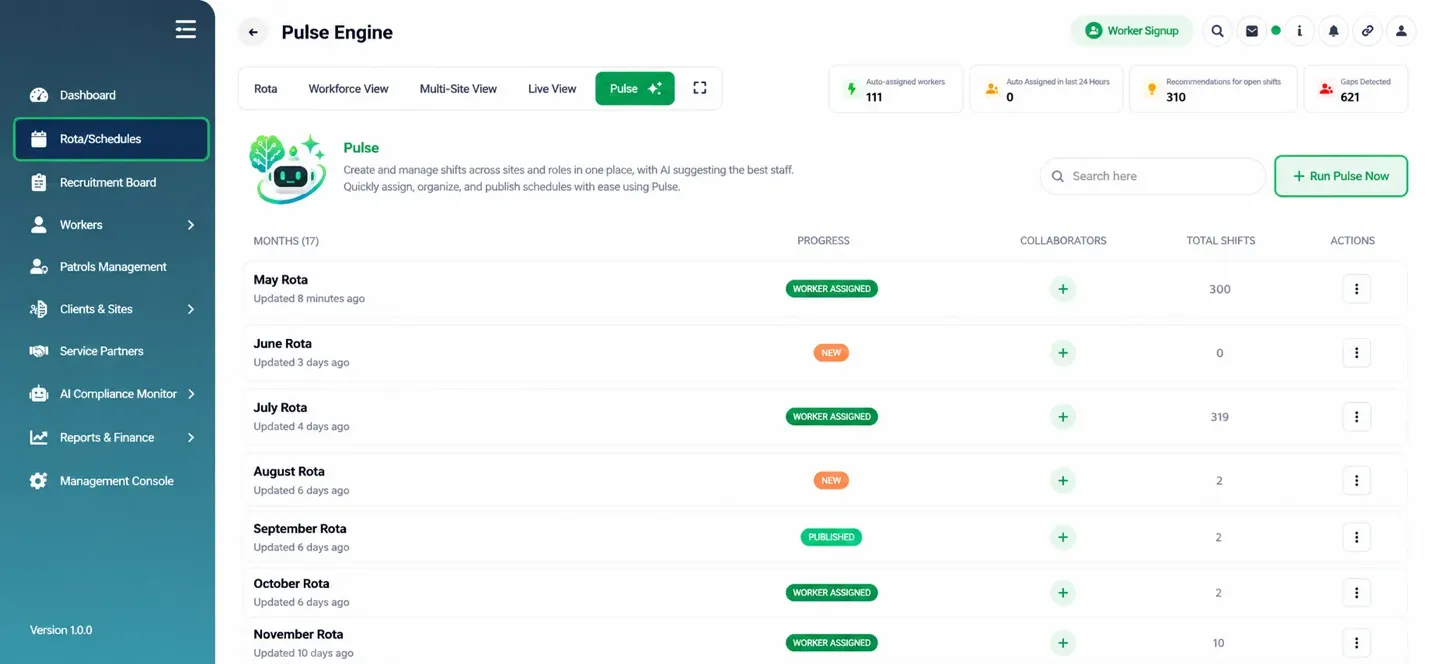
Pulse allows users to create shifts in bulk, automatically assign suitable workers using AI, and publish completed schedules directly to the main rota
Once shifts are allocated, worker verification and compliance checks help ensure officers meet the relevant requirements before deployment. Book-on and book-off records provide a clearer picture of who attended and when, while automated compliance monitoring flags issues such as missing or expired documentation that need attention.
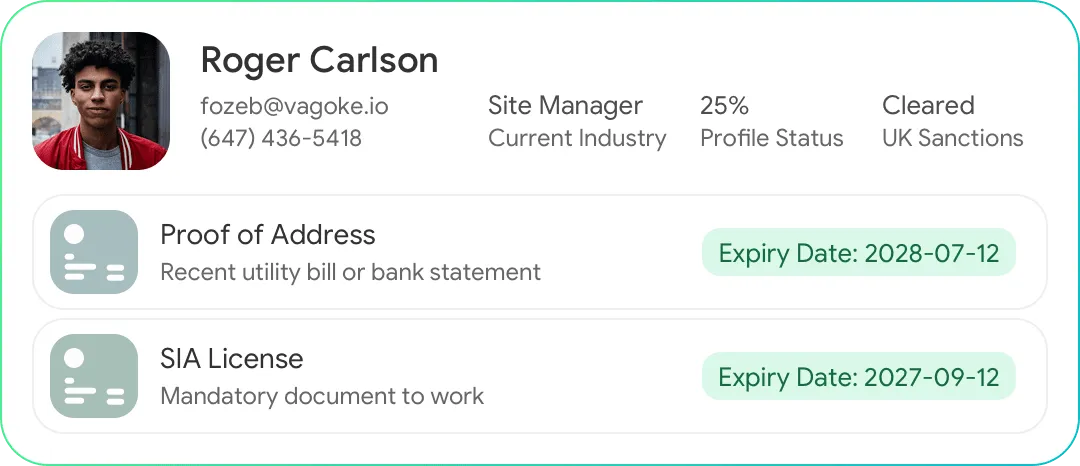
Arez.io manages and monitors right-to-work files, SIA licences, training records, and contracts in one place ensuring your workforce is always compliant
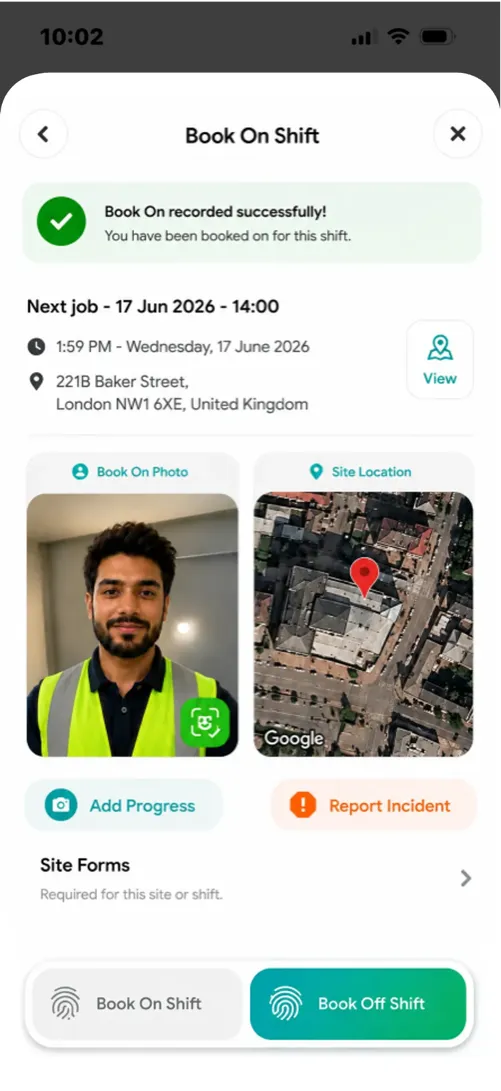
Eliminate manual timesheets and payroll leakage with a geofenced, mobile-first clock-in system that blocks non-compliant workers from starting shifts.
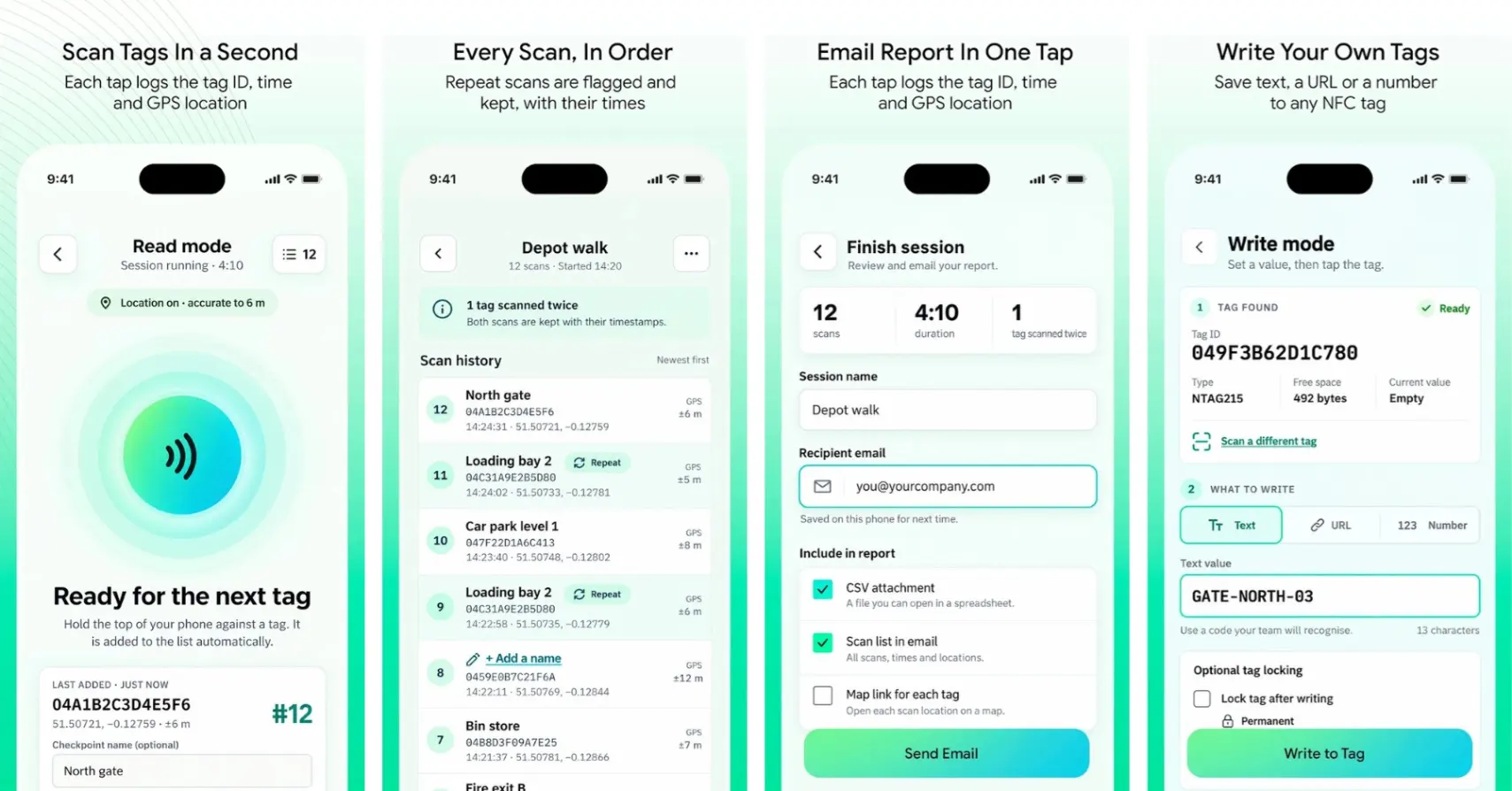
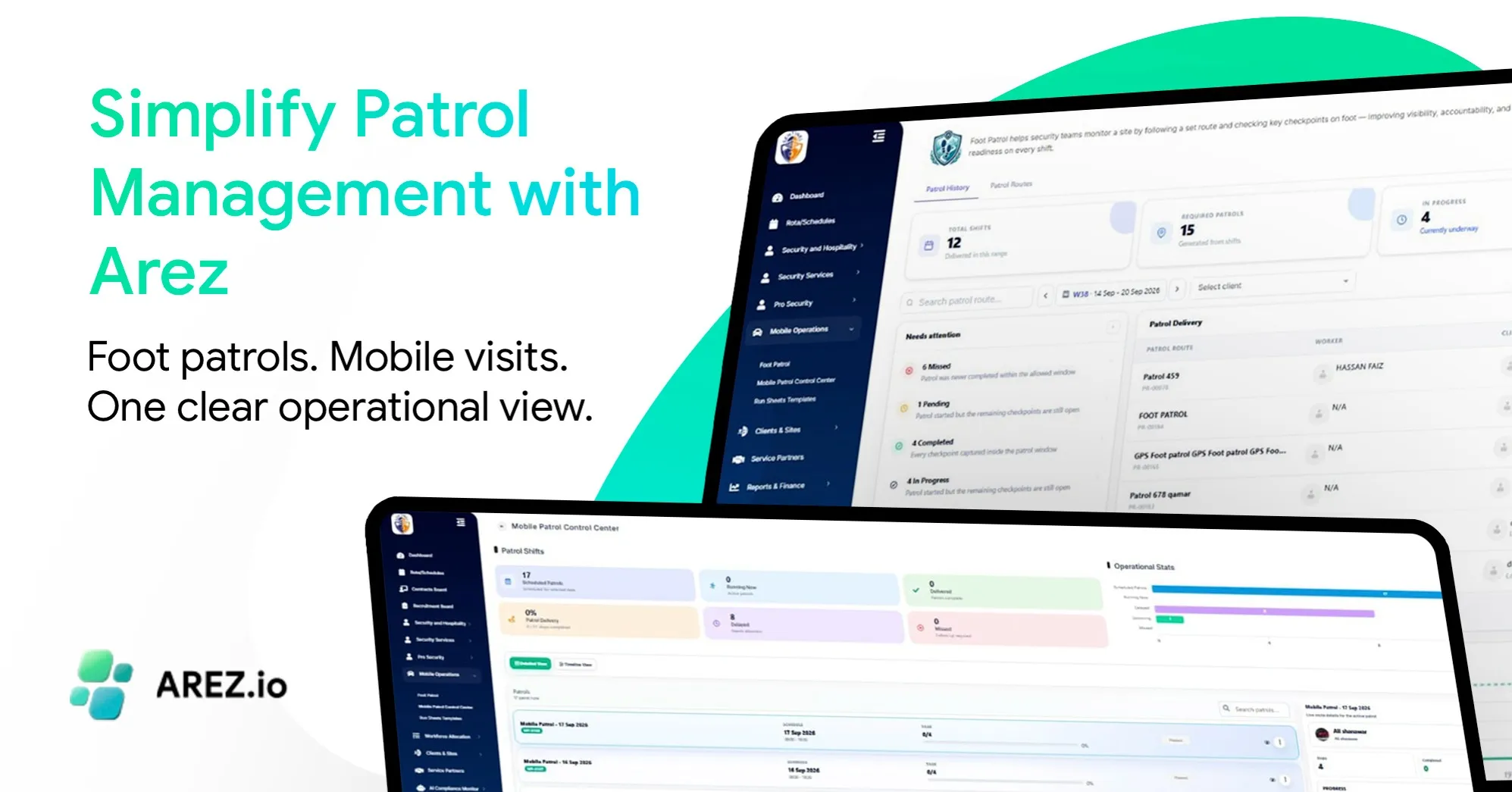
For mobile and foot patrols, Arez Operate supports patrol management and the capture of checkpoint activity and records. Supervisors can review patrol progress, identify missed or incomplete activity and access reporting that provides evidence of what took place. This makes it easier to investigate exceptions and respond when clients ask whether contracted patrols were completed. If you're using NFC tags for patrol checkpoints, read our guide to the Tapround NFC reader/writer.
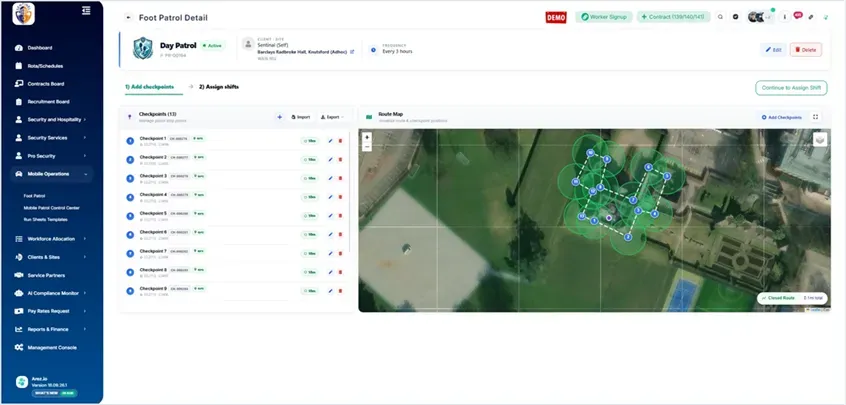
Arez lets you build a patrol route for a site, add checkpoint locations, choose how each checkpoint is completed, and assign the patrol directly to a worker shift. Patrol History then gives operations teams a clear view of patrol delivery and compliance
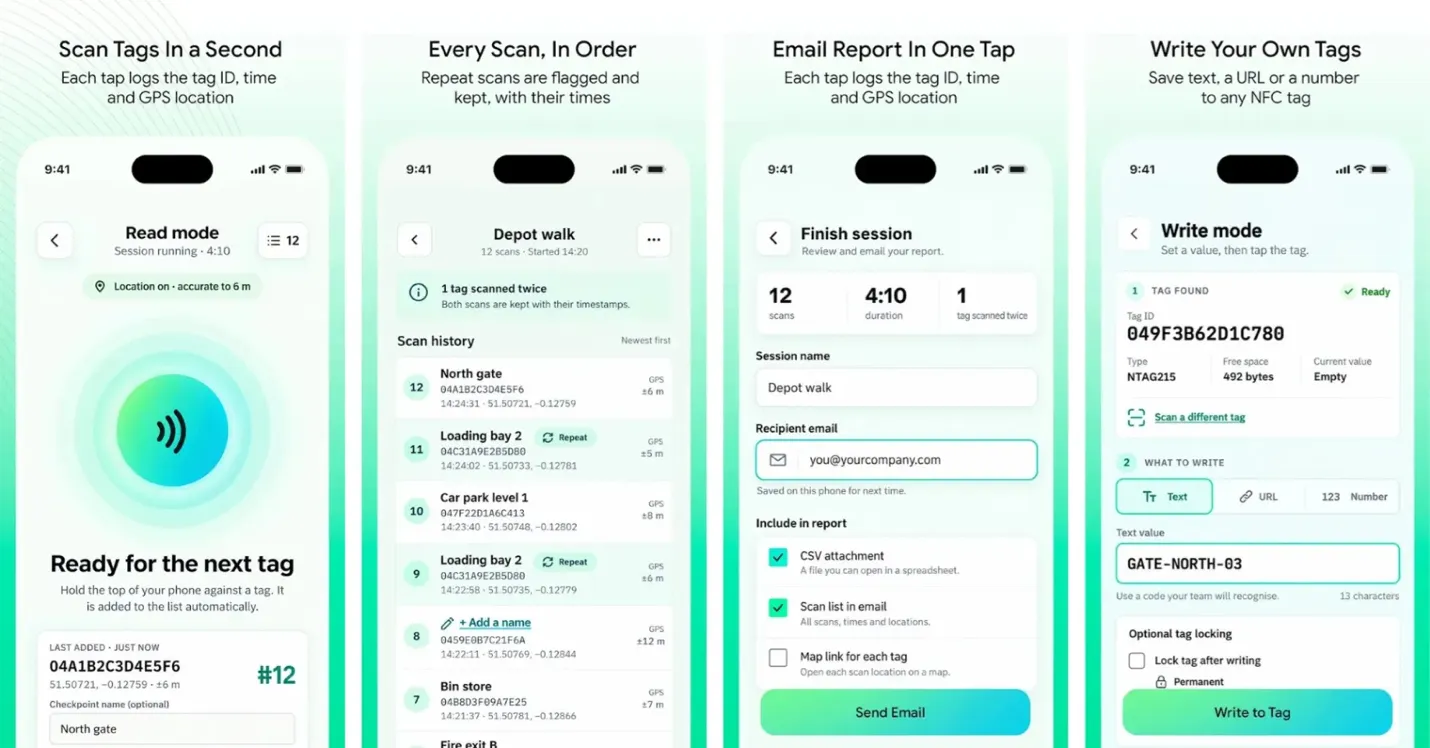
By bringing these activities together, Arez Operate helps security businesses move beyond simply scheduling shifts. They gain greater visibility of attendance, compliance and patrol delivery, with less reliance on manual checks and chasing information across separate systems
You sell the hours. Make sure you can prove they were delivered.
Your clients are paying for a service, not simply a rota. You need to know that the agreed hours are covered, the required patrols take place and the right people are delivering the work.