The 5 Bottlenecks We Keep Seeing in Job-Based Teams And How To Fix Them
'%20fill='%230A2841'%3e%3cg%20id='Group-23'%20transform='translate(1030,%20300)'%3e%3cg%20id='Group-22'%20transform='translate(0,%2015)'%3e%3crect%20id='Rectangle-Copy-6'%20fill-opacity='0.08'%20x='0'%20y='0'%20width='36'%20height='36'%20rx='15'%3e%3c/rect%3e%3cg%20id='Group-3-Copy-10'%20transform='translate(14,%2011)'%3e%3cpath%20d='M1.48030663,7.00622181%20L0,7.00622181%20L0,4.54113581%20L1.47413869,4.54113581%20C1.47413869,4.01634435%201.4507005,3.52367128%201.48092343,3.03386591%20C1.50559521,2.63812154%201.54383646,2.23147985%201.66472817,1.85466237%20C2.01506741,0.761490221%202.84959027,0.135181726%204.05048903,0.0382530307%20C5.00096925,-0.0380281321%205.96501894,0.0233409237%206.94078773,0.0233409237%20L6.94078773,2.40813096%20C6.43008195,2.40813096%205.92986166,2.40755742%205.42964138,2.40813096%20C4.82209886,2.40927805%204.61238876,2.60428252%204.60868799,3.1778251%20C4.60622081,3.6183058%204.6080712,4.0587865%204.6080712,4.53540038%20L7,4.53540038%20C6.90686404,5.37449317%206.81804564,6.17515861%206.72676007,7.00105992%20L4.61979029,7.00105992%20L4.61979029,14%20L1.48030663,14%20L1.48030663,7.00622181%20Z'%20id='Fill-1'%3e%3c/path%3e%3c/g%3e%3c/g%3e%3c/g%3e%3c/g%3e%3c/g%3e%3c/svg%3e)


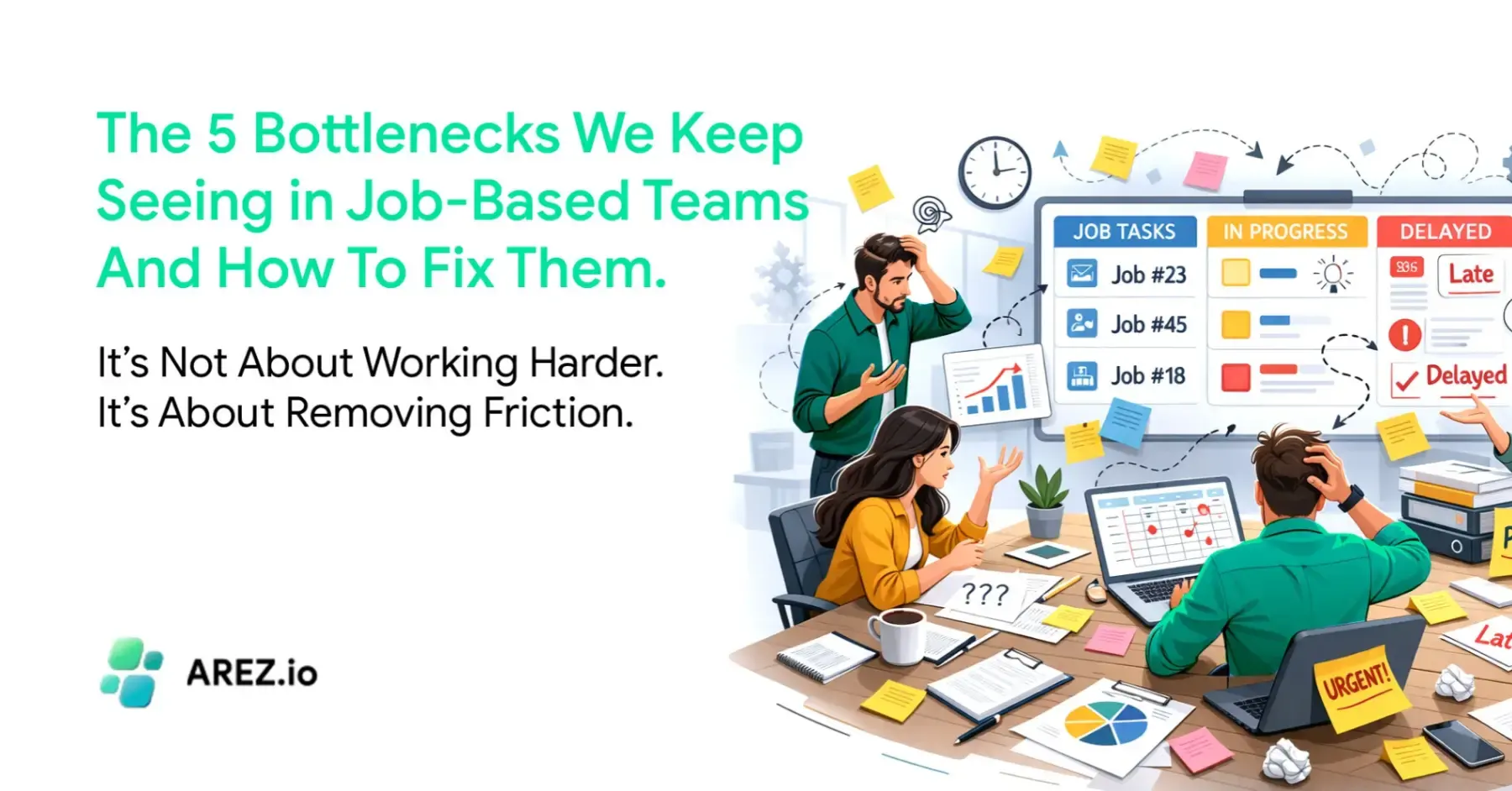
Every day, job-based teams face remarkably similar challenges, regardless of their industry, size, or structure. In most cases, nothing is fundamentally broken, jobs are delivered, clients are looked after, and revenue comes in. However, time and again we hear the same underlying concern: too much of the day-to-day workflow still relies on fractured systems, manual handling, and individuals remembering to push tasks forward. It is within these gaps that mistakes occur, delays creep in, and revenue is quietly lost.
High-performing teams are not winning by doing more work. They are winning by removing micro-friction across the job lifecycle, the small inefficiencies that compound into delays, stress, and margin leakage.
Below are the five bottlenecks we encounter most frequently, along with how a more connected and automated approach from Arez can help address them.
1. Work Starts in Email and Has to Be Rebuilt
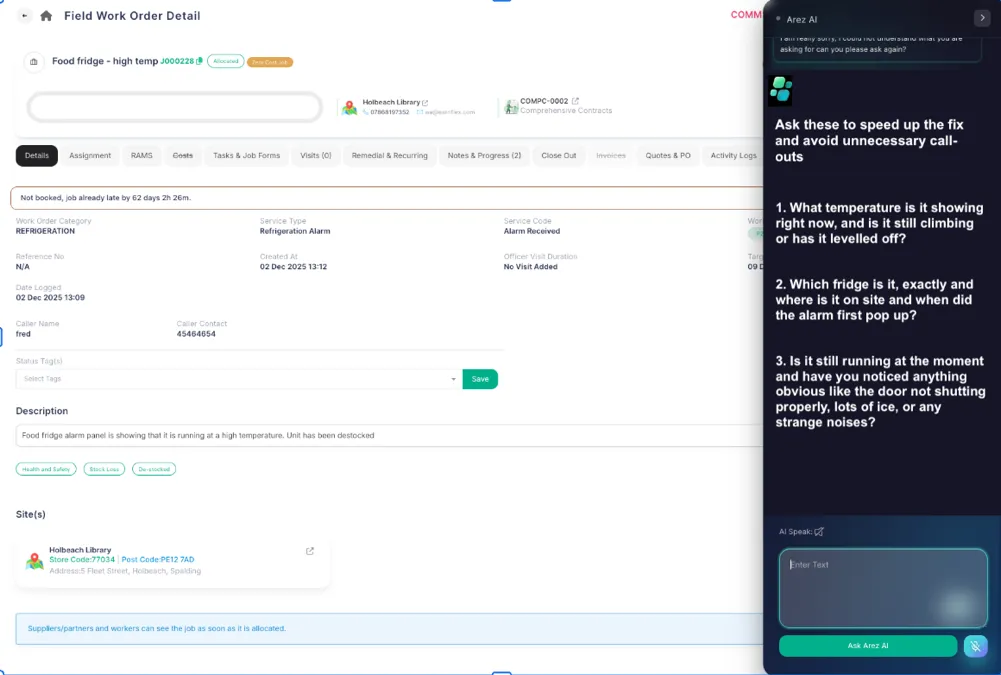
In many businesses, new jobs still begin with an email. Someone reads the request, copies the details into a system, forwards it internally, and then manages updates through further messages. It feels manageable, but it relies heavily on people remembering to transfer and update information correctly. Important details can be missed, and duplication becomes routine.
Arez removes that rework by turning incoming requests into structured jobs automatically. Instead of copying information across systems, Arez will capture it once and allow it to flow through scheduling, tracking, and billing without repeated manual input.
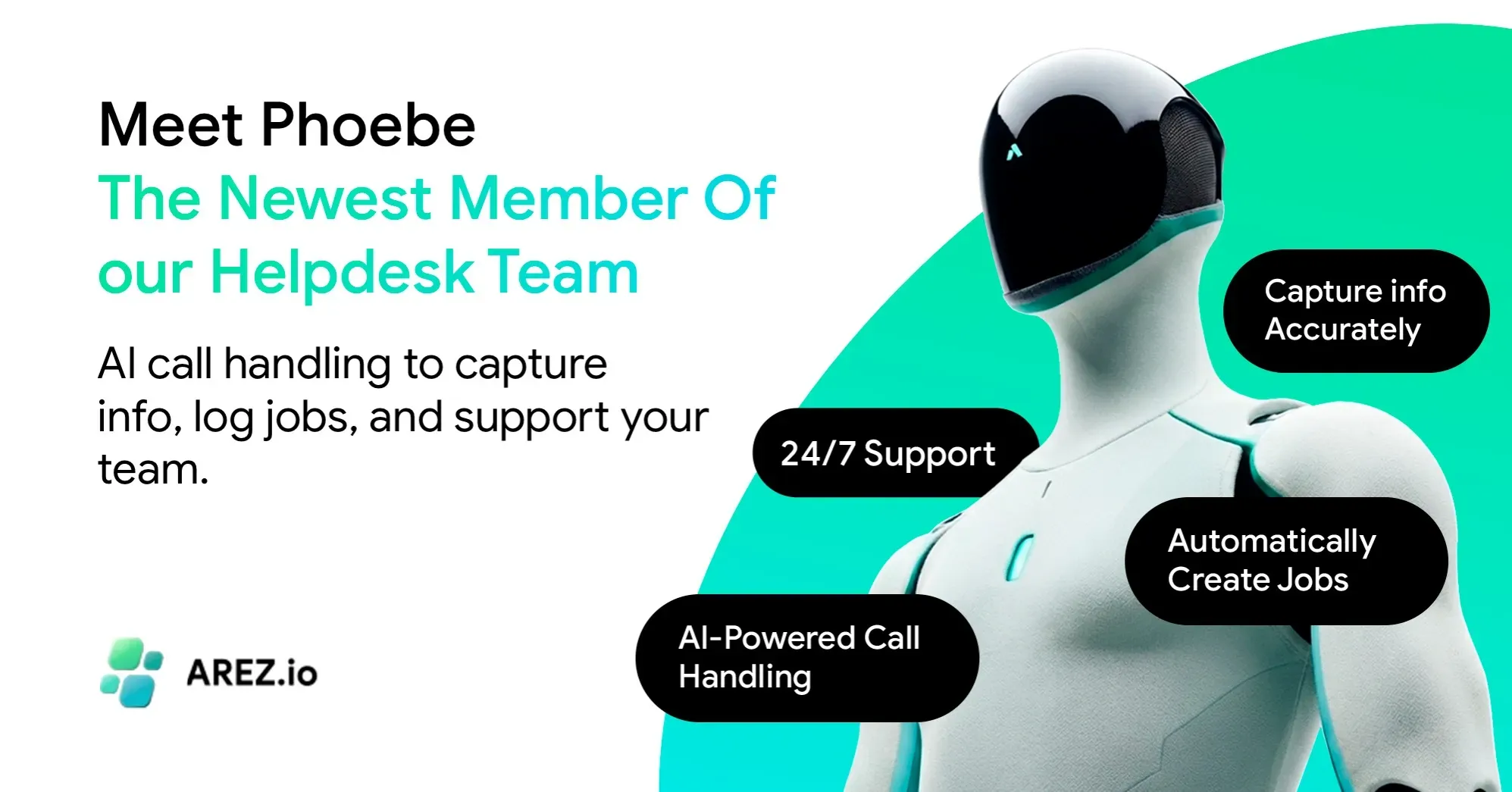
The Arez Helpdesk AI Autopilot, takes this one step further, by analysing incoming requests instantly. While the customer is still on the line, the system asks the right questions to help understand the issue, recommend the correct category and urgency level, and suggest the most appropriate response, preventing costly rework later on.
2. Scheduling Depends on Constant Oversight
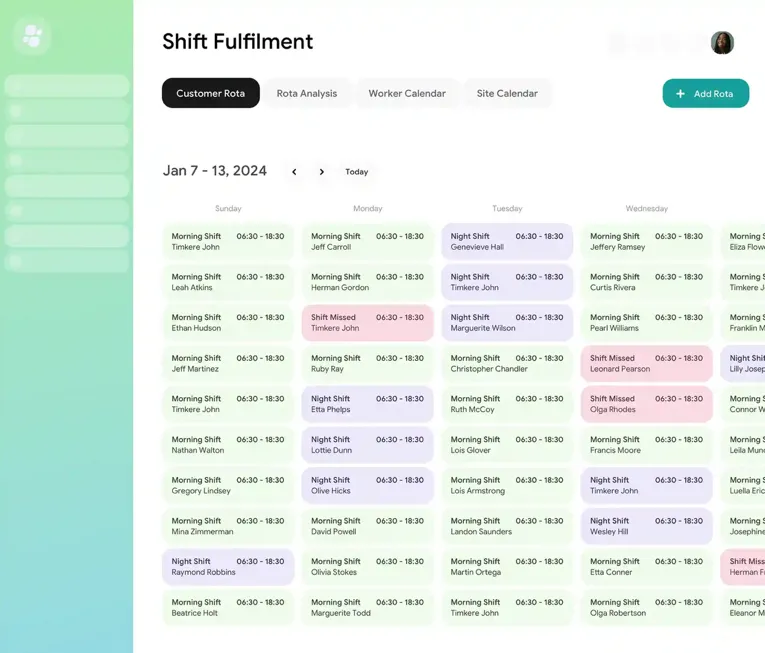
Scheduling is another area where manual effort remains high. Managers often check availability, verify qualifications, and adjust plans whenever something changes. Even with software in place, the real decision-making can sit with one or two individuals who hold everything together.
With AI-assisted scheduling and built-in compliance checks, Arez reduces that dependency. The system can match people to jobs based on availability and credentials, flag potential issues early, and provide a clear overview of workload. This shifts scheduling from reactive problem-solving to structured planning.
3. Problems Only Become Visible When They Escalate
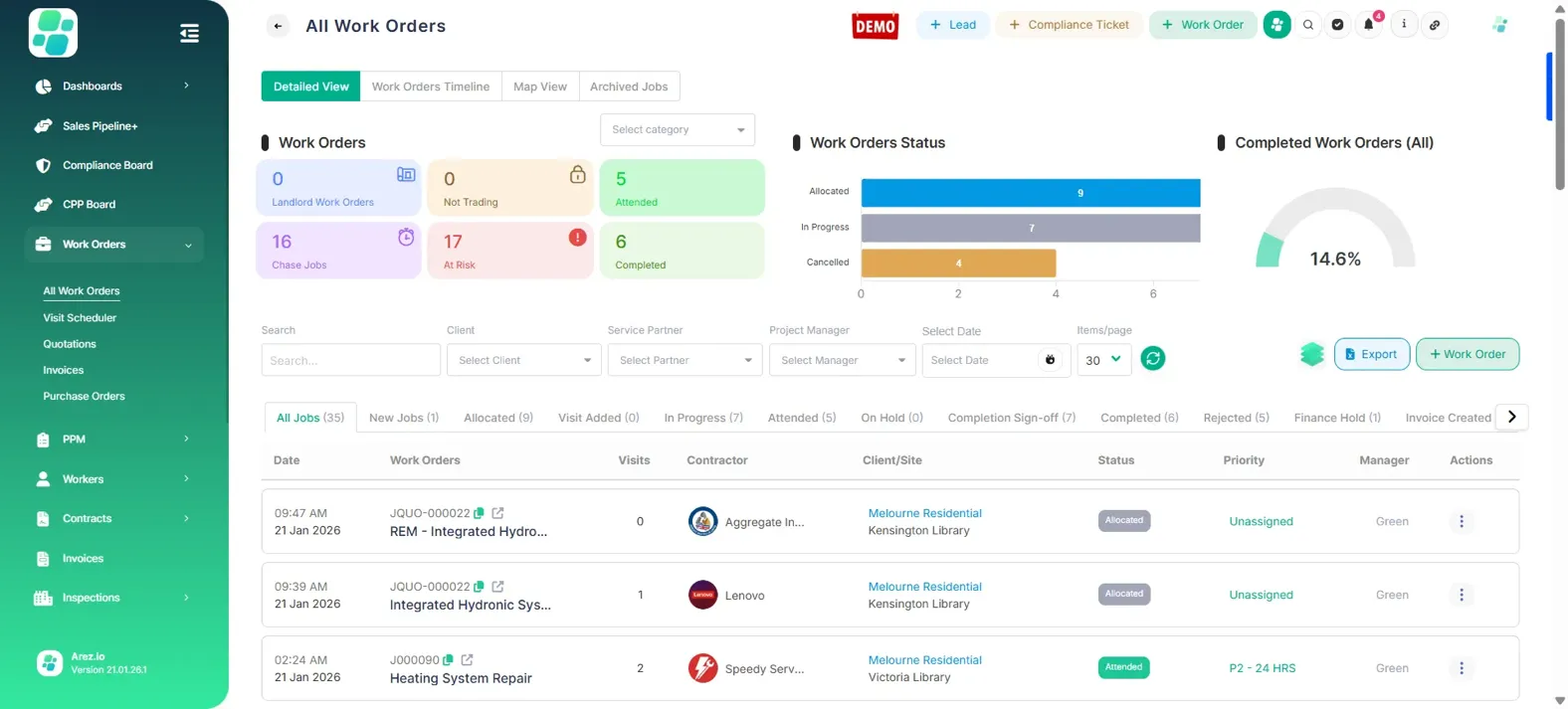
Many teams collect data but lack clear, real-time visibility across active jobs. As a result, delays or bottlenecks are often discovered only when someone asks for an update or a deadline slips. Operating in this way creates unnecessary stress and makes proactive management difficult.
Arez centralises operational data into a live view of what is happening across the business. Managers can see which jobs are on track, which require attention, and where capacity is stretched. Instead of reacting to issues after they surface, teams can address them earlier.
With Arez in place, issues are also less likely to originate in the first place, because jobs have been categorised, prioritised, and properly scoped from the outset. Instead of reacting after problems surface, teams can prevent many of them entirely.
4. Reporting Is Too Time-Consuming
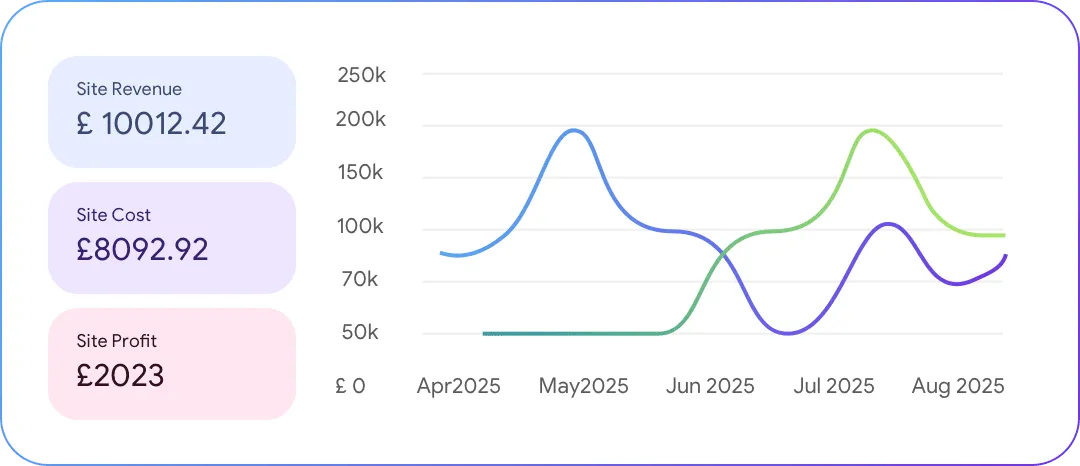
Despite having reporting tools, many organisations still spend significant time exporting data, checking accuracy, and compiling reports. The information exists, but turning it into something useful requires manual effort each time.
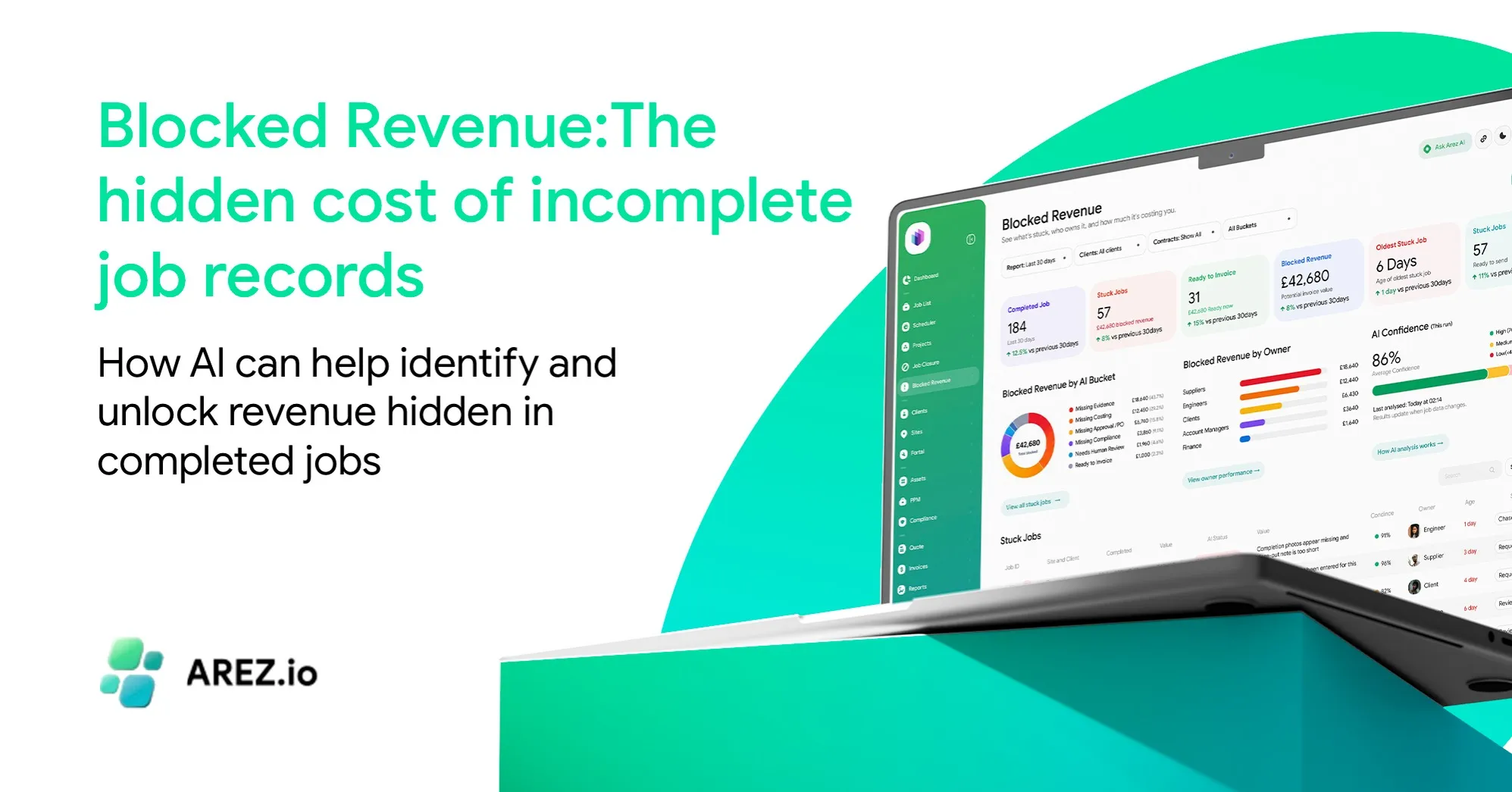
By consolidating job, operational, and financial data in one place, Arez enables real-time dashboards and automated reporting. This reduces repetitive administrative work and allows leaders to access up-to-date insight without rebuilding the same reports every month.
5. Invoicing Lags Behind Delivery
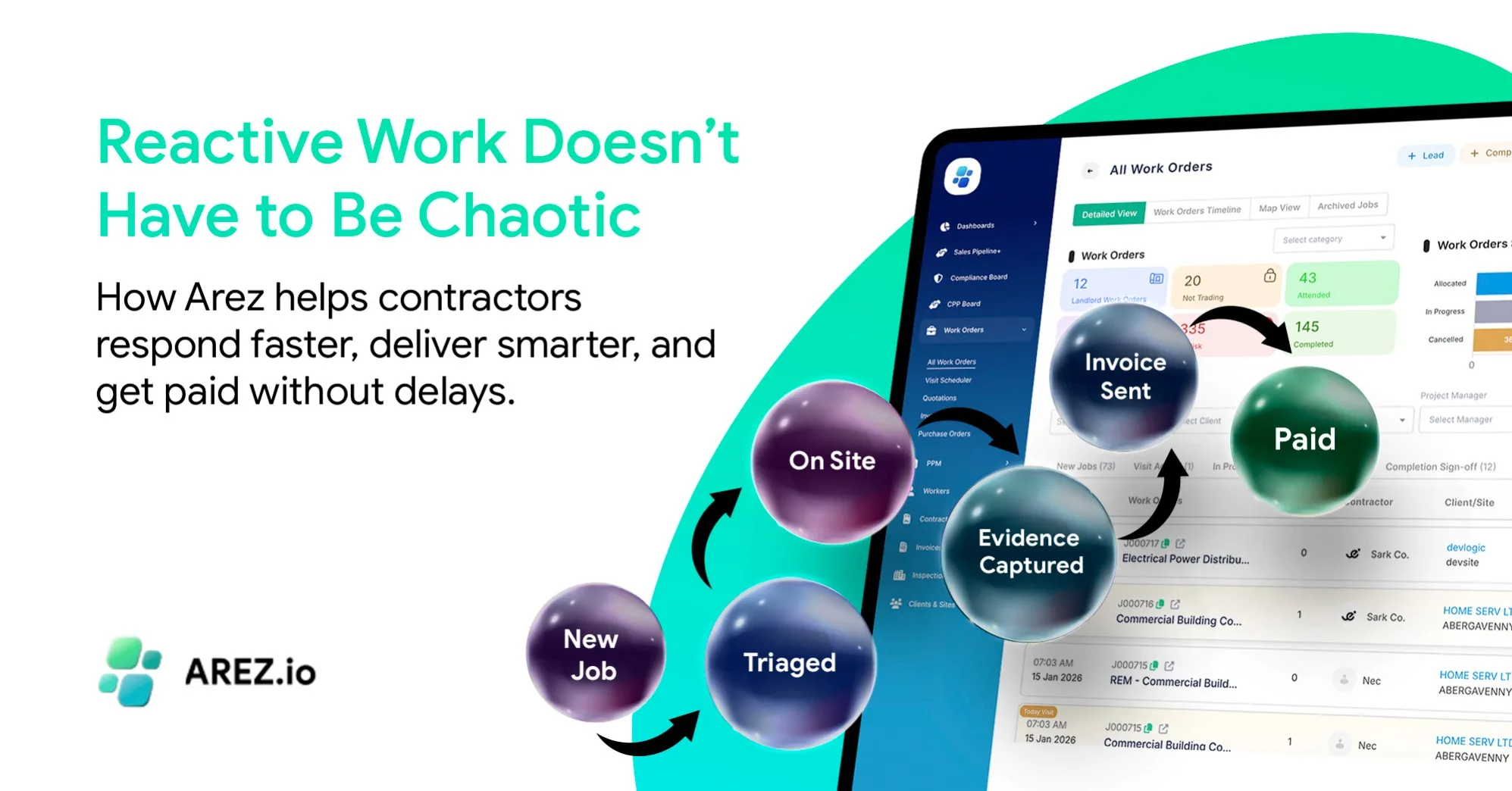
A common frustration is the gap between completing a job and raising an invoice. In many cases, billing depends on someone confirming completion, updating records, and manually triggering the finance process. Even small delays or minor errors, repeated across multiple jobs, can affect cash flow.
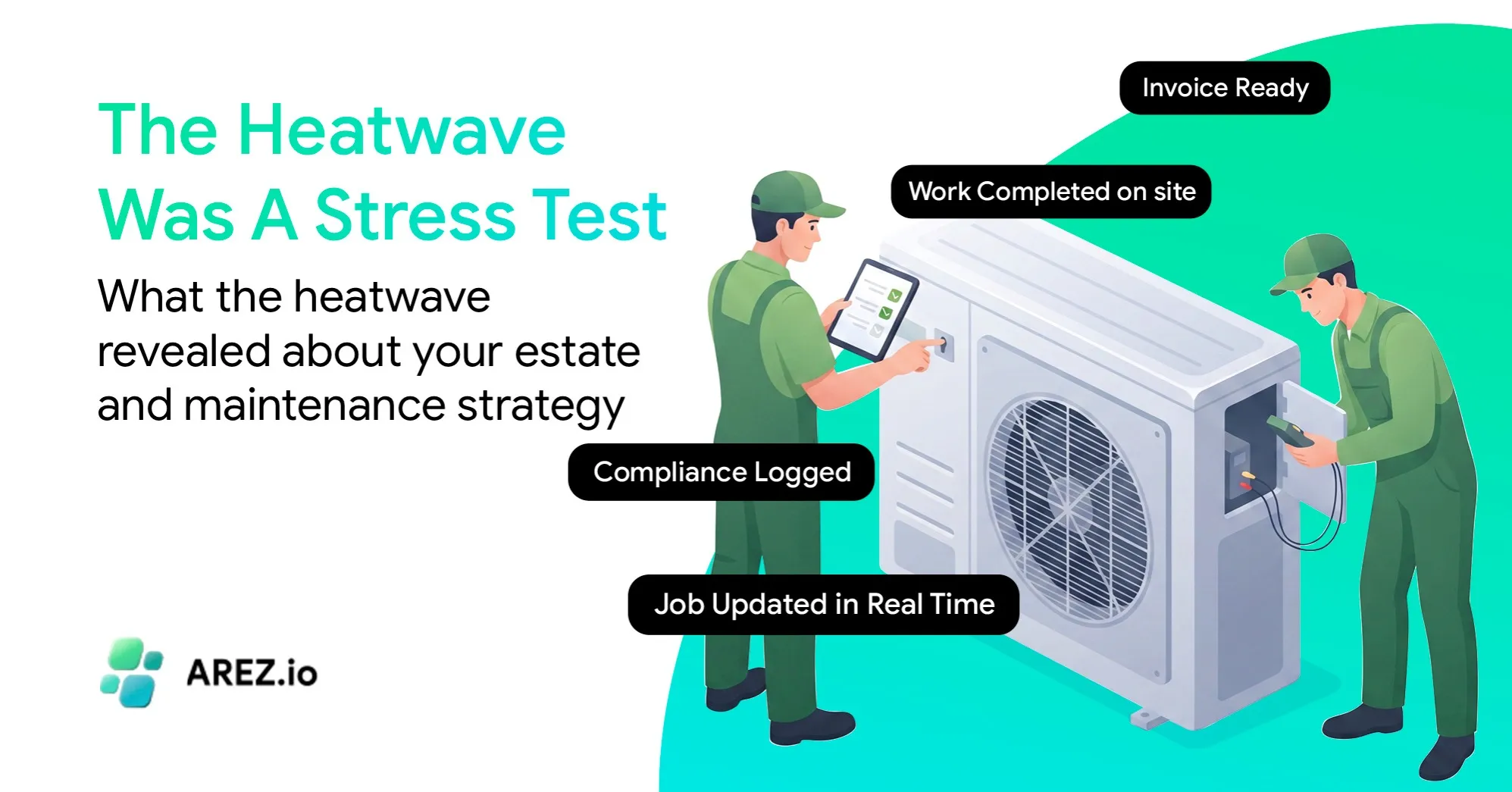
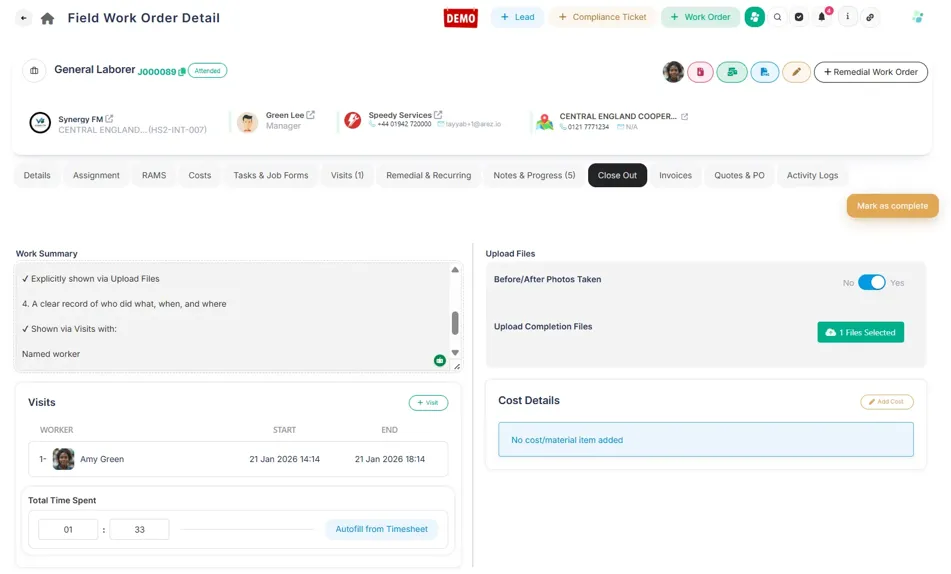
Arez connects operational activity directly to invoicing. Collecting all the evidence required during the job Arez means that once work is completed and approved, the billing process can move forward with approved invoices pushed to Xero, Sage, and other leading accounting platforms, without additional manual steps, improving accuracy and reducing delays.
The Underlying Issue
Across all five bottlenecks, the common theme is not a lack of software, but the amount of manual effort required to connect systems and move information between stages. People become the bridge, copying, checking, and chasing details that should flow automatically.
The difference between average and high-performing job-based teams is rarely effort. It is friction. The small delays, duplicated inputs, unclear visibility, and manual handovers that quietly accumulate across every stage of delivery.
By combining job management, AI-driven automation, compliance tracking, reporting, and invoicing within a single platform, Arez removes that friction. The result is not just efficiency, but greater clarity, stronger control, and better margin protection across the entire workflow.
To find out more and to book your free demo click here: https://arez.io/book-a-demo