AI Confidence Matters: Why Facility Management Still Needs Human Oversight


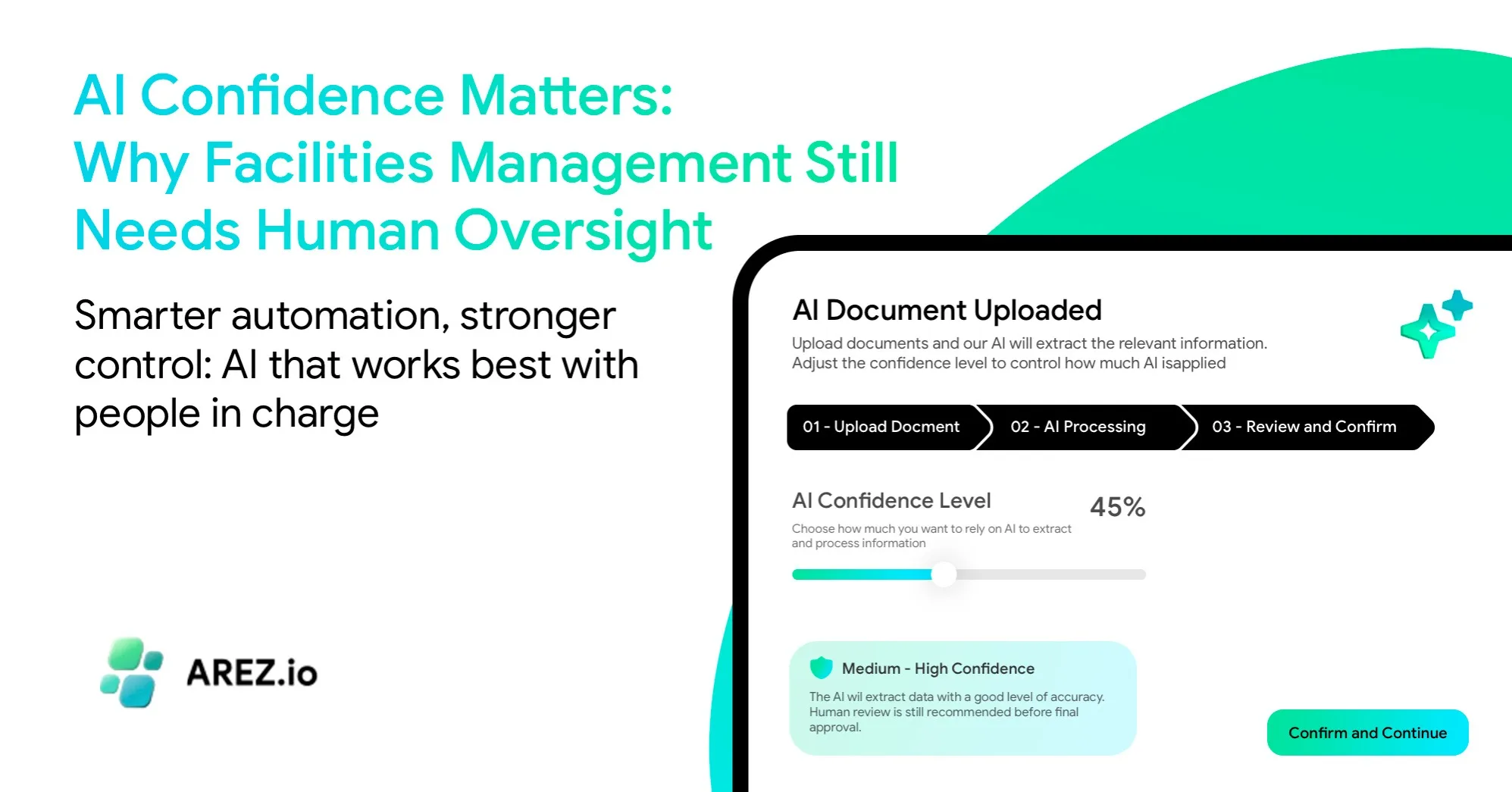
The US facility management industry is a market worth hundreds of billions of dollars a year, and it keeps growing as buildings, vendors, and compliance requirements get more complex. As the industry continues to digitize, AI is quickly becoming part of everyday FM operations.
AI Adoption Is Accelerating Across Industries
AI is no longer experimental. According to McKinsey’s 2025 State of AI report, 78% of organizations now use AI in at least one business function, up significantly year over year. KPMG’s global research found a similar trend: 66% of people now use AI regularly.
Facility management is following the same path.
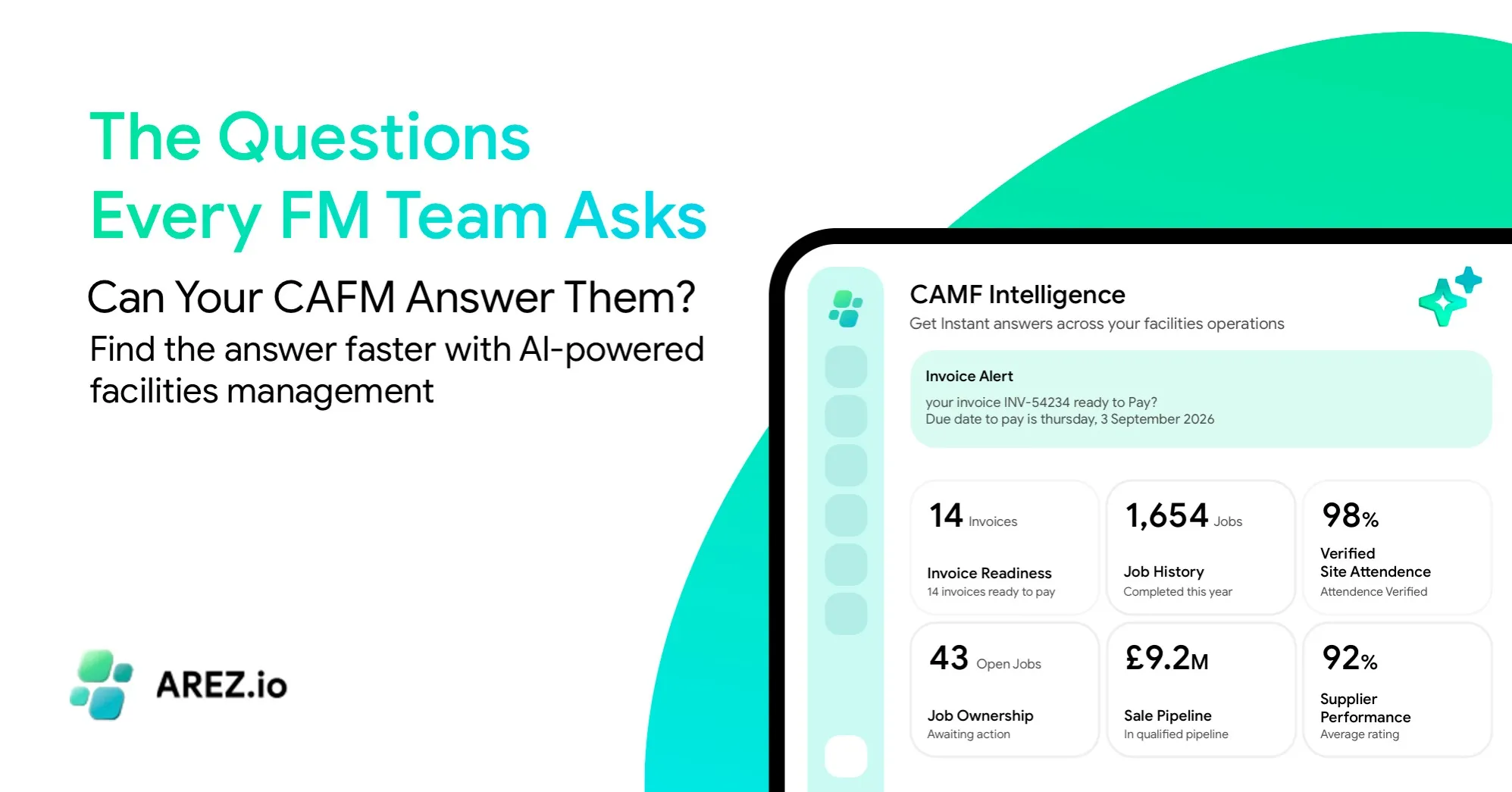
Where FM Teams Are Using AI Today
Early adopters are already embedding AI across the operational lifecycle, including:
- Work order management and triage
- Shift and crew scheduling
- Compliance and certification tracking
- Vendor and subcontractor management
- Sales pipeline, bids, and quotes
- Invoicing and payment tracking
- Reports and dashboards
- Workflow and task automation
The Reality: AI Is Not Always Right
Most businesses learn one thing quickly once they start using AI: it makes mistakes. Even the most advanced AI systems can misinterpret information, generate inaccurate outputs, or make incorrect decisions.
That’s why trust and oversight matter just as much as automation.
Why AI Governance and Accountability Matter
KPMG’s AI Trust Study found growing concerns about AI reliability, accountability, and governance. Businesses want the productivity benefits of AI, but they also want safeguards that keep humans in control of important operational decisions.
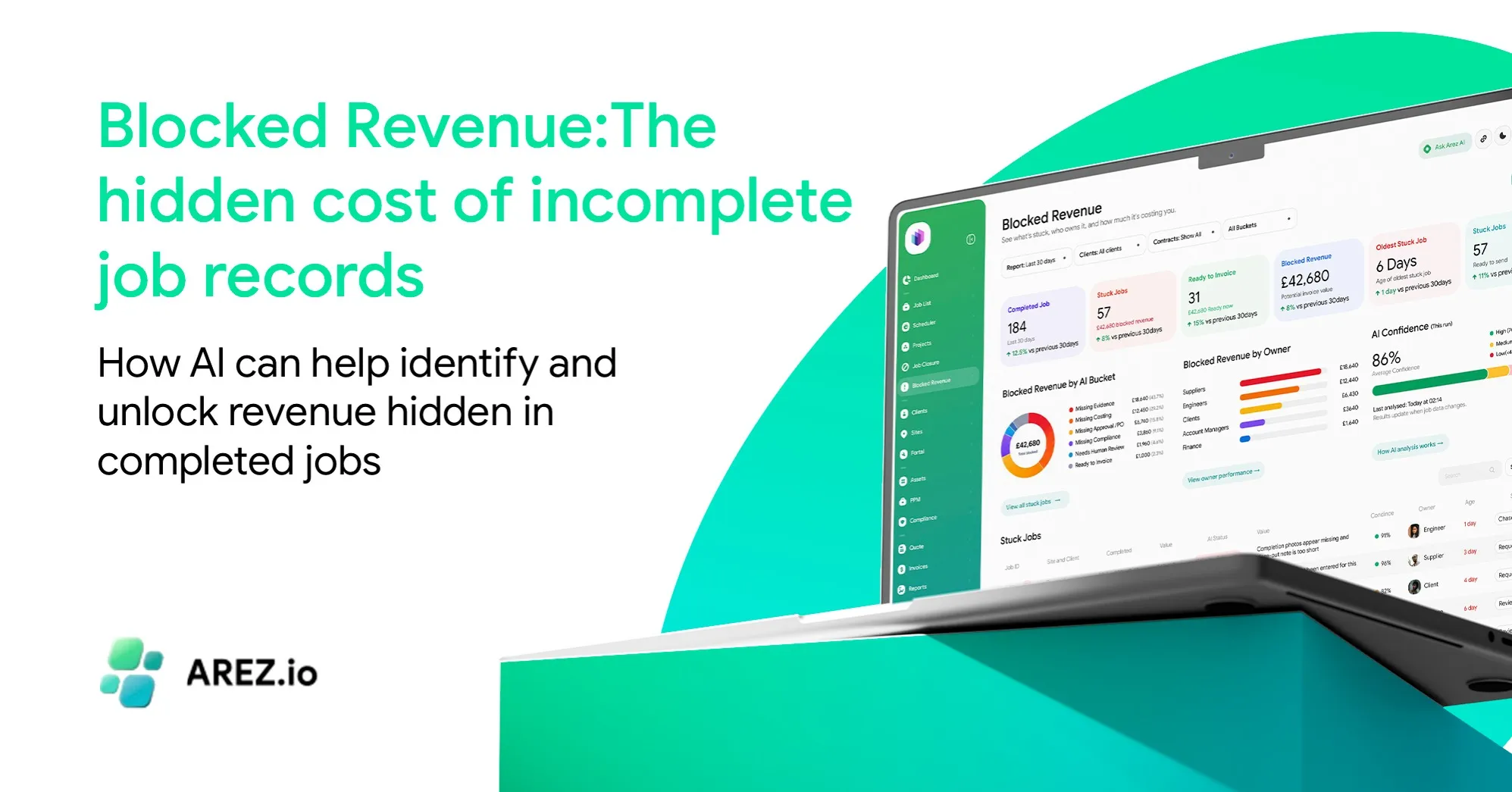
For facility management teams, the stakes are practical. An AI error on a compliance certificate, a vendor invoice, or a work order can mean failed audits, billing disputes, or missed service-level agreements (SLAs).
Our Approach: AI That Supports People, Not Replaces Them
At Arez, we don’t see AI as a way to replace people. We see it as a way to reduce repetitive administrative work, support operational teams, and improve day-to-day workflows.
That’s why we take a bottom-up approach to AI adoption. Instead of using AI to remove human involvement, we introduce it into practical workflows where it can automate repetitive tasks and support faster decisions, all while keeping people in control.
For many of our customers, this is already reducing administrative time by up to 50% across quoting, reporting, job workflows, and operational processes. Control always stays with the user.
AI Confidence and Human Oversight in Practice
Example: The AI-Assisted Document Uploader
One example in the Arez platform is the AI-assisted document uploader. Rather than assuming AI is always correct, Arez includes an AI confidence slider. It lets businesses decide how much trust to place in AI-generated outputs and automation.
Adjustable Oversight Based on Your Risk Level
Every business has a different tolerance for risk, so oversight should be adjustable:
- Higher confidence settings allow more automation.
- Lower confidence settings trigger additional review and human approval.
This is a more practical and responsible way to adopt AI. Teams cut administrative work while people stay firmly in control.
See Controlled AI in Action
Want to see how Arez helps FM businesses introduce AI in a practical, controlled way? Book a free 20-minute demo and follow us on LinkedIn.
Edits and flags before publishing
- US market stat: I replaced the UK £100bn/IWFM line with a general statement. Analyst estimates of the US FM market vary widely (roughly $342B to $396B for 2025 depending on the firm and scope), so I avoided a single figure. If you want a hard number, pick one source (e.g., Mordor Intelligence or IFMA/BLS) and link it.
- Fixed copy error: The unfinished “all while…” sentence now ends “all while keeping people in control.”
- Cleaned the McKinsey link: I removed the ?utm_source=chatgpt.com tracking parameter.
- US terminology: rota became crew scheduling, supplier became vendor, jobs became work orders, plus US spellings.
- Added one line on the practical stakes (audits, billing disputes, SLAs). Remove it if you’d rather stay strictly with the original content.
- “Up to 50%” claim: Back it with a case study or customer data if possible, since unsourced stats weaken credibility.
I can also put this in a Word doc or Claude Doc, or add FAQ schema questions if you’d like.